

Cleaning vs. Disinfection in Cleanrooms
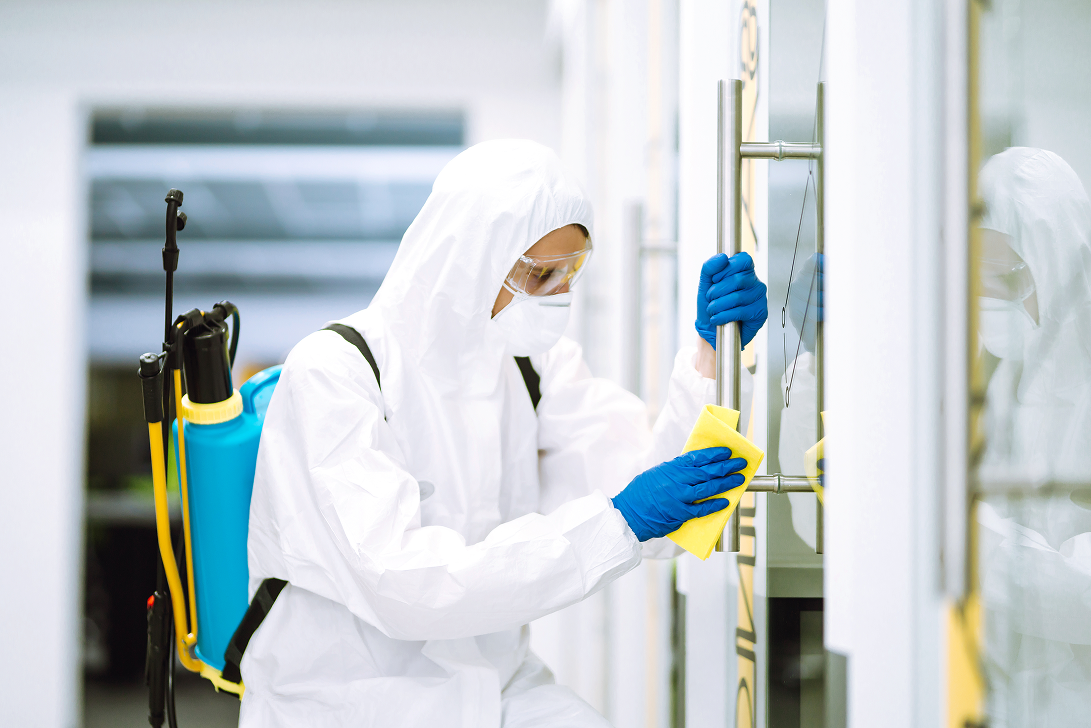
Cleaning and disinfection aren't the same in a cleanroom. Understand the distinction, the limits of each, and how to build a layered contamination strategy.
Cleaning and disinfection are both essential to contamination control in cleanroom environments — but they are not the same process. Each operates through a different mechanism, achieves a different outcome, and carries its own set of limitations. Understanding where one ends and the other begins isn't just a matter of vocabulary. It's the foundation on which a contamination control strategy is built.
Cleaning vs. Disinfection in Cleanrooms: Definitions and Key Differences
At their core, cleaning and disinfection describe two different outcomes. Cleaning removes. Disinfection inactivates. A surface can be visibly clean without being disinfected, and a disinfection step applied to an unprepared surface is working against its own efficacy. The distinction is operational, not semantic.
Cleaning is the physical removal of visible soil, particulate matter, residue, and organic debris from surfaces. It relies on mechanical action, detergents, and solvents. Its purpose is reduction of the surface burden, not inactivation of what remains. Cleaning prepares the surface; it does not complete the job on its own.
Disinfection is the targeted reduction of viable microorganisms on a surface to levels defined as acceptable for a given environment — a standard for frameworks, such as the EU GMP Annex 1, to address contamination control requirements for classified spaces. For this framework, compliance is achieved through chemical or physical mechanisms that disrupt microbial function. Disinfection is not a substitute for cleaning; it is dependent on it. Organic matter and surface residue physically shield microorganisms from disinfecting agents, significantly degrading efficacy when surfaces haven't been properly prepared first.
Understanding them as sequential and interdependent, rather than interchangeable, is what makes it possible to design a program around what each one delivers.
What Cleaning Actually Delivers in a Controlled Environment
A rigorous cleaning program is the foundational layer of contamination control. In ISO 14644-classified environments, where airborne particulate limits define the operational standard, surface cleanliness is a critical factor in maintaining total contamination control. Effective cleaning reduces particulate burden on surfaces, removes chemical residues, and exposes the surface so that subsequent decontamination methods can make direct contact with surfaces rather than with a layer of accumulated organic matter.
What cleaning does not do is inactivate microorganisms. It simply displaces them. A properly cleaned surface may carry a dramatically lower bioburden than before, but it is not a controlled surface in the microbial sense. Organisms that survive the cleaning process, or are reintroduced after it, remain viable.
What Disinfection Actually Delivers — and What Governs Its Effectiveness
Disinfection picks up where cleaning leaves off, but it operates within its own set of constraints. Chemical disinfectants work through varied mechanisms: disrupting cellular membranes, denaturing proteins, and oxidizing cellular components. Their efficacy is a function of concentration, contact time, surface condition, temperature, and the specific organism type being targeted. When applied correctly to a properly prepared surface, disinfection can achieve substantial reductions in surface bioburden.
But its effectiveness is governed by several variables.
Contact Time: Many disinfectants require sustained wet contact to achieve their labeled efficacy. In practice, evaporation rates, surface absorption, and application inconsistency can all result in subthreshold exposure — a gap between what the protocol specifies and what was delivered.
Spectrum of Activity: A disinfectant that performs well against vegetative bacteria may offer limited activity against bacterial spores or other resistant organisms. No single chemistry addresses the full range of potential microbial risk in a cleanroom environment, which is why rotation protocols exist — and why managing them adds operational complexity that accumulates over time.
Manual Variability: Every step in a manual disinfection process — how product is applied, to which surfaces, and for how long — is dependent on human consistency across shifts and personnel. Technique drift is a documented phenomenon, and its effects tend to accumulate quietly rather than announce themselves.
These are the boundaries of any process that depend on chemistry and human execution. Understanding them is what makes it possible to design programs that account for them.
Why Both Are Required — and Why Layering Matters
Neither cleaning nor disinfection alone meet the performance standard that controlled environments require, and the sequence between them is itself a control, not a formality.
What follows from that is a more important design question. Both processes have defined ceilings and are subject to variability. Studies in pharmaceutical cleanroom environments have documented how recontamination between scheduled cleaning and disinfection cycles accumulates incrementally, placing greater demand on the next intervention and increasing dependence on consistent execution at that point. Over time, program performance becomes increasingly reliant on individual elements performing as designed — which no element, chemical or human, does indefinitely.
The most resilient programs are designed around that reality rather than against it. Layered hygiene — multiple independent mechanisms working in tandem — creates redundancy that a single-method approach cannot replicate. This is a principle reflected in regulatory frameworks like EU GMP Annex 1, which emphasizes contamination control strategies as a holistic, documented system rather than a checklist of individual steps. The value isn't theoretical coverage. It's that the system holds when any one element performs below expectation. That's the context in which supplemental decontamination technologies have become strategically significant: not to compensate for a failing program, but to deliberately close the gaps that exist within even a well-run one.
UV-C Disinfection in GMP Cleanrooms: Where It Fits in a Layered Program
Rather than relying on chemical contact and dwell time, UV-C disrupts microbial DNA and RNA at the molecular level, impairing replication without introducing chemistry to the surface. That difference in mechanism is what defines its role in a layered contamination control program.
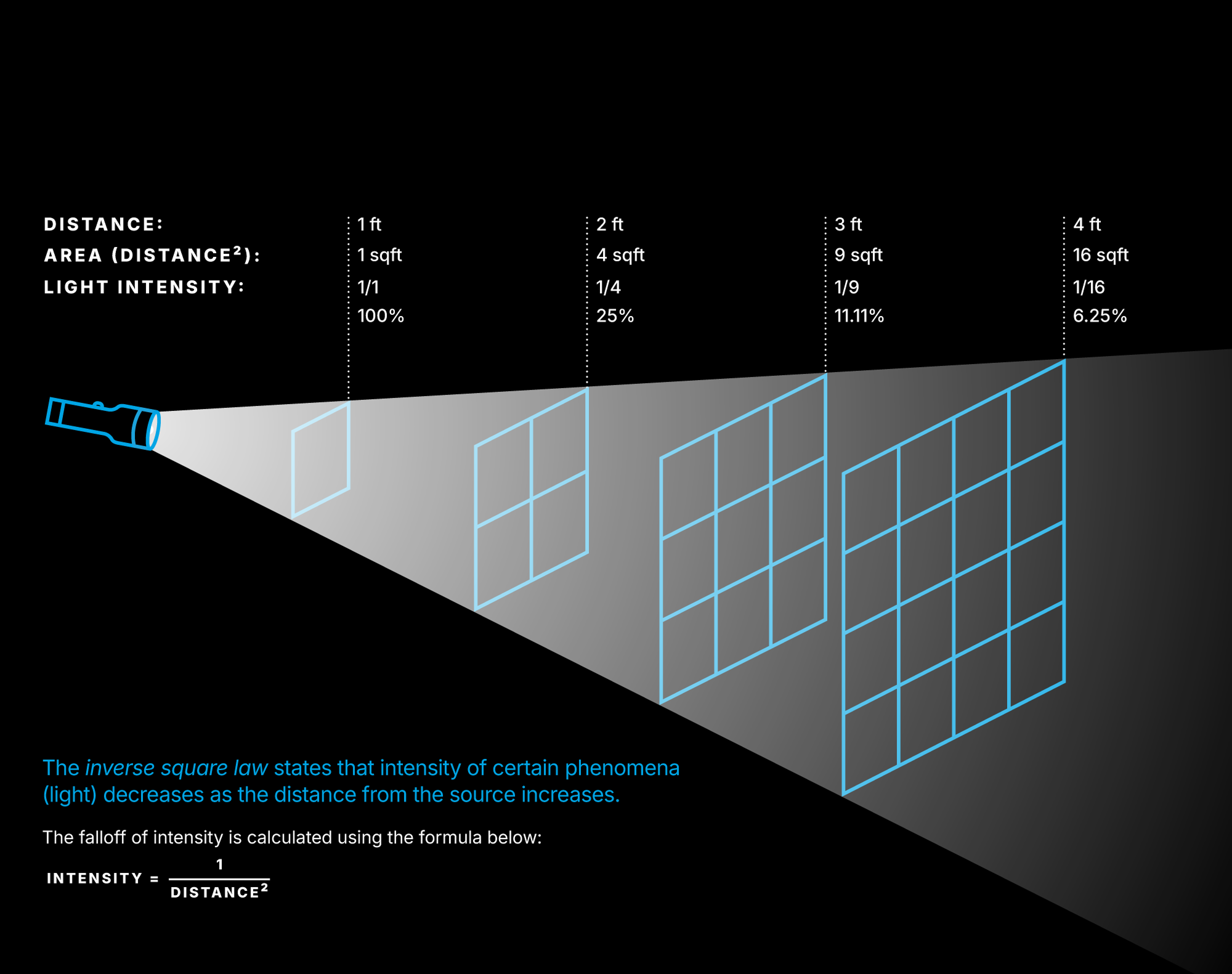
Because UV-C introduces no chemistry, it adds no residue to surfaces over time — a relevant consideration in environments where surface cleanliness is measured at a molecular level. It also operates through a physical rather than chemical process, which means its efficacy isn't governed by the same variables that affect chemical disinfection: formulation concentration, dwell time, or application method. That said, UV-C has its own performance dependencies. Shadowed surfaces, complex layouts, and organic burden can all effect efficacy, which is why surface preparation remains essential, and line-of-sight coverage is a real design consideration for any UV-C program.
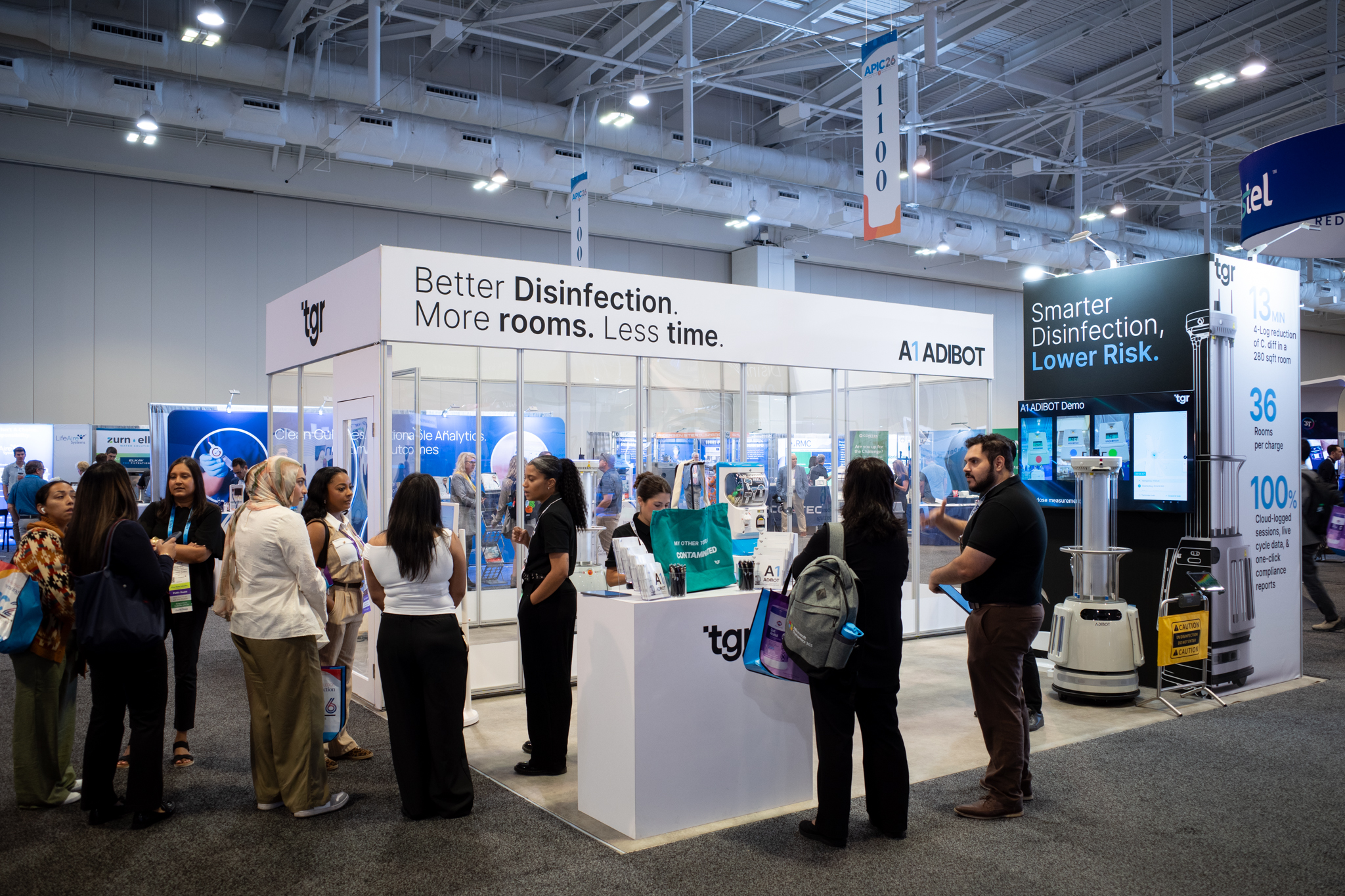
Autonomous UV-C systems address some of those constraints by enabling consistent, repeatable dosing across defined areas — reducing variability in coverage from cycle to cycle. In environments where reproducibility is a documented quality requirement, such as GMP-classified Grade B, C, and D cleanrooms, that consistency has practical value as part of a broader program. TGR's A1 is designed specifically for these environments, delivering validated, repeatable disinfection cycles that complement existing cleaning and chemical disinfection protocols without disrupting them.
The role UV-C plays is additive. It is not a replacement for cleaning, a substitute for chemical disinfection, or a standalone strategy. It is a complementary mechanism — one that brings a different mode of action to the disinfection layer and extends the overall program in ways that a single-method approach cannot.
The Distinction That Drives the Strategy
Cleaning and disinfection aren't the same process. They were never meant to be. And the gap between treating them as interchangeable versus treating them as complementary — each with a defined role, understood limitations, and a place within a larger system — is often where contamination control programs either hold up or don't.
The organizations getting this right tend to be the ones that stopped asking whether their program was sufficient and started asking where it was structurally exposed. The answer to that question is almost always where the next layer belongs, and for GMP-classified environments, that's a question worth exploring with the right technology partner.
See how TGR approaches it →
Frequently Asked Questions
What is the difference between cleaning and disinfection in a cleanroom?
Cleaning is the physical removal of particulate matter, residue, and organic debris from surfaces. Disinfection is the reduction of viable microorganisms on a surface through chemical or physical mechanisms. The two processes are complementary and sequential — cleaning prepares the surface, disinfection addresses microbial control. Neither replaces the other.
Does UV-C disinfection replace chemical disinfection in cleanrooms?
No. UV-C operates through a different mechanism than chemical disinfection but is not a substitute for it. Organic matter and surface shadowing can attenuate UV-C efficacy, which means surface preparation and chemical disinfection remain essential. UV-C functions as a complementary layer that extends coverage and adds redundancy to an existing program.
Why is a layered hygiene strategy important in controlled environments?
No single method of contamination control performs without variability over time. Layered hygiene combines multiple independent mechanisms — cleaning, chemical disinfection, and supplemental technologies like UV-C — so that the overall program holds when any individual element performs below expectation. Redundancy is a design principle, not an overcorrection.
What cleanroom classifications are appropriate for autonomous UV-C disinfection?
Autonomous UV-C systems are well-suited for GMP-classified cleanroom environments including Grade B, C, and D spaces, where consistent, reproducible disinfection cycles are a documented quality requirement. Their ability to deliver repeatable dosing independent of human variability makes them particularly relevant in high-frequency or high-risk zones within those environments.


%2C%20Color%3DNegative.png)

