1 in 3
drug recalls were for sterility problems (2012 to 2023)

Contamination control has to work within the production schedule — and stand up to technical review. Explore a defined, repeatable role for automated UV-C surface treatment in your contamination-control program.
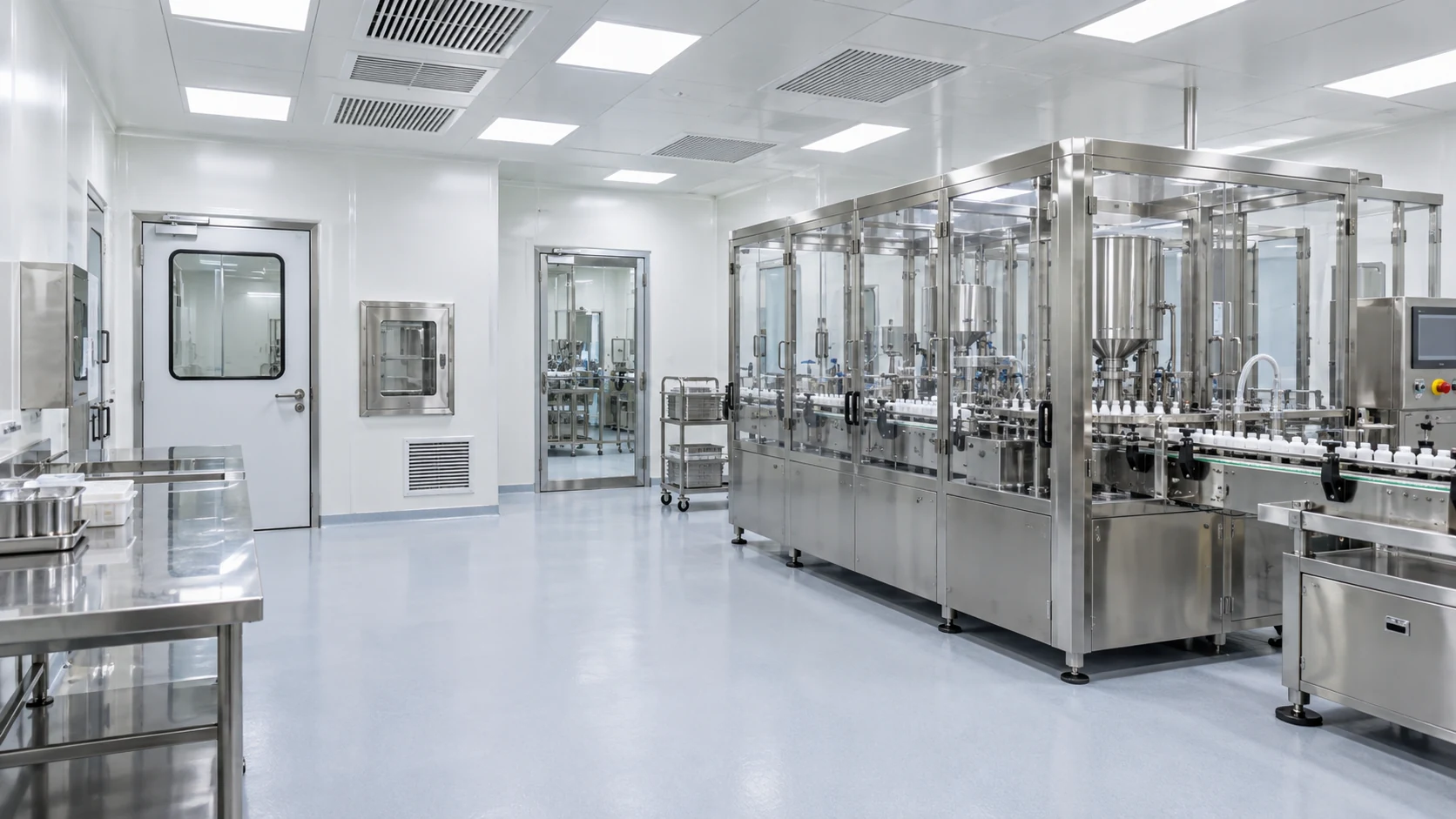
Contamination remains a leading driver of product recalls, compliance events, and operational disruption, and EU GMP Annex 1 has only raised the bar, mandating a more rigorous, documented contamination control strategy (CCS) across aseptic manufacturing.
Manual cleaning remains essential to that strategy, but its dependence on operators introduces variability that’s difficult to quantify and harder to defend in an audit — and as standards rise, that variability is exactly what needs closing.
These figures aren’t isolated incidents. They reflect a consistent, industry-wide gap between current procedural controls and the reliability contamination-control programs are expected to deliver.
1 in 3
drug recalls were for sterility problems (2012 to 2023)
$1–2M+
cost per contaminated batch
70%
of cleanroom microbial isolates link to personnel
Room preparation, personnel movement, treatment, and return to operation all compete for time. A useful evaluation considers the complete workflow, including the responsibilities around the UV-C cycle.
A procedure needs a clear sequence for teams to follow across shifts. Automation carries out programmed movement and exposure steps while the team manages preparation and area access.
Microbial results, exposure measurements, and equipment activity records answer different questions. The evaluation should connect each piece of evidence to a defined requirement.
UV-C delivers energy to exposed surfaces to inactivate microorganisms. The UV-C treatment itself adds no chemical disinfectant. It complements cleaning and the wider contamination-control program.
In an autonomous system, programmed movement brings the light source to multiple positions within the area. Those positions change the angles and distances between the lamps and the surfaces in scope.
Define the proposed treatment step: which surfaces to address, when to operate, and what needs to be demonstrated.
Understand UV-C dose and exposureDiscuss your proposed applicationUV-C light inactivates microbes without chemicals or residues, eliminating dwell times and enabling faster returns to production than manual wipe-downs allow.
Fully autonomous UV-C systems typically log cycle data, creating an audit-ready record without manual tracking and supporting a facility’s overall 21 CFR Part 11 compliance practices.
When using a dosimeter, UV-C exposure can be quantified, recorded, and verified against a target dose threshold.
Autonomous UV-C systems deliver consistent, documented results for every session regardless of shift, staffing level, or operator experience.
Organism-specific laboratory findings describe the reduction achieved under the reported test conditions. Review the test method, organism, surface, and exposure conditions together.
Positioning, exposure duration, and obstructions affect the UV-C reaching a surface. An exposure assessment should address representative room arrangements and shadowed areas.
Aseptic operations and quality teams need records for review and retention. ADIS provides on-demand reporting for all A1 activity. Discuss the reporting needs of your proposed system, including stakeholders, review cadence, and the documentation needed to support full compliance practices.
Published dose requirements from AstraZeneca’s cleanroom qualification study, run to the EN 13697 method with USP <1072> acceptance criteria. Each value is the dose reported for the reduction shown on its row, under the study’s test conditions. The dose reaching a surface in a room depends on distance, angle, and whether the light reaches it at all.
We’ll discuss the room classification, environmental surfaces in scope, representative layout, and access restrictions, along with the operating conditions a treatment would run under.
Together, we’ll review how light would reach target surfaces, accounting for equipment, fixtures, and obstructions as we work through disinfection points and exposure duration.
We’ll walk through preparation, personnel and goods movement, area access, the treatment cycle, and return to operation with your team, and define who’s responsible for each step.
We’ll bring manufacturing, engineering, microbiology, and quality requirements together with your team, and identify the supporting documents, test evidence, and site assessment needed to make the next decision.
No. UV-C is an additional surface-treatment step, not a substitute for manual cleaning, which remains a separate requirement. UV-C delivers energy to exposed surfaces to inactivate microbes; it does not remove soil or residue, and soil left on a surface can shield the microbes beneath it. The practical sequence is unchanged: clean as your procedures require, then run UV-C as a defined step within the wider contamination-control strategy. Read more: The role of surface UV-C.
Expect to run Installation, Operational, and Performance Qualification (IQ/OQ/PQ) as you would for any equipment entering a classified space. TGR does not assume that our UV-C device is qualified for every environment; qualification is site-specific and belongs to your quality team. Part of that work is confirming if our robot’s materials and design are compatible with your classified space — construction materials, surface finishes, data privacy and whether or not it adds particles. TGR provides the corresponding detail for the robot: material composition, design detail, laboratory test methods and results, and site assessment. Read more: The evidence to build your case.
Arrange a technical review to scope the documentation set.
Personnel are the dominant contamination source in a cleanroom — roughly 70% of cleanroom microbial isolates link back to people — and every manual intervention is another entry into the space. An autonomous system runs its programmed sequence of positions and exposures after the room is cleared, so the treatment step itself does not add gowned entries. It reduces human intervention in the treatment step; it does not remove the personnel controls, gowning, or monitoring that sit around it. Read more: Reducing human-borne contamination in cleanrooms.
No. UV-C is line-of-sight: only surfaces the light directly reaches receive a dose, and the energy delivered falls off with distance and with the angle of the surface. Shadowed areas and interiors are not treated. A mobile system improves on a fixed one by treating from several positions, which changes the angles and distances to the surfaces in scope — but an exposure assessment still has to name which surfaces are covered and which are not, using representative room arrangements. Read more: UV-C dose and exposure.
Five kinds, and they answer different questions: Microbial response: organism-specific laboratory findings, read together with the test method, organism, surface, and exposure conditions. Surface exposure: how much UV-C actually reaches the surfaces in your room arrangement, including shadowed areas. Equipment records: what the system logged, which documents activity and not outcome. Cleanability: whether the device itself can withstand your disinfectants and vaporized agents as often as your SOPs require. Unintended environmental effects: whether the device introduces particles into the space, and whether its internal cavities can harbor microorganisms. A decision needs all five tied to a defined acceptance criterion. Read more: The evidence to build your case.
Request the laboratory reports — TGR walks through test conditions with you rather than sending a PDF cold.
ADIS records are relevant to 21 CFR Part 11, and they are not a compliance determination. ADIS logs operating time and cycle completion by area, robot, operating mode, and operator, which is the kind of electronic record Part 11 governs. Whether a given record set meets your Part 11 obligations is your quality team’s assessment against your own procedures. One distinction matters more than any other here: a completed-task record documents that the equipment ran as programmed. It does not measure the dose delivered to a surface or the microbial reduction achieved. Read more: Reporting and documentation.
Bring your reporting requirements — stakeholders, review cadence, retention — to a technical review.
The UV-C treatment adds no chemical disinfectant, so there is no residue to remove and no dwell or wipe-down time after the cycle. Material compatibility still warrants review: UV-C is energy, and prolonged repeated exposure can degrade some polymers, coatings, and printed labels over time. Identify the materials repeatedly in the exposure path and confirm them as part of the application review. Read more: The role of surface UV-C.