

Choosing a Safe UV-C Disinfection Device

Choosing a UV-C disinfection device is about safety as much as efficacy. Review the key safety features, certifications, and criteria to weigh before you buy.
Ultraviolet-C (UV-C) disinfection has become a trusted tool for reducing microbial contamination across industries—from water treatment to air purification to facility maintenance. As adoption grows, one factor stands out as the defining measure of whether UV-C can be used effectively in day-to-day operations: safety.
That safety depends on three factors: using UV-C at a wavelength that behaves predictably, engineering devices with safeguards that prevent accidental exposure, and designing systems that carry out disinfection without unnecessary interruptions. This article looks at each of these elements to explain what truly makes UV-C disinfection safe to use.
Understanding the UV Spectrum
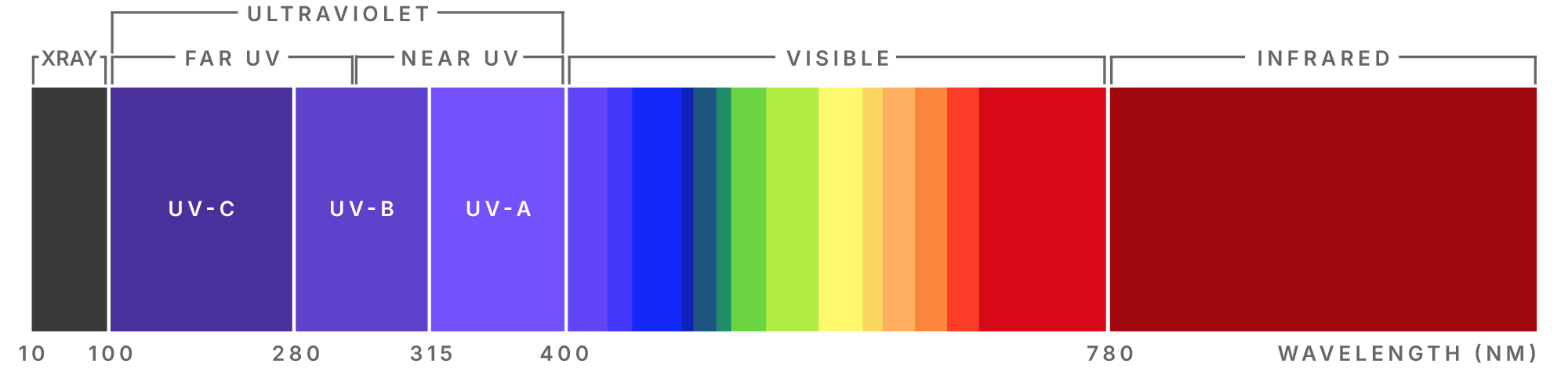
UV light is part of the electromagnetic spectrum, sitting between visible light and X-rays. It’s divided into three categories, each with distinct properties:
UV-C doesn’t naturally reach Earth’s surface. It’s absorbed by the atmosphere by the ozone layer. Disinfection systems use artificial UV-C sources, most commonly 254 nm low-pressure mercury lamps, because this wavelength delivers strong antimicrobial performance with highly predictable behavior.
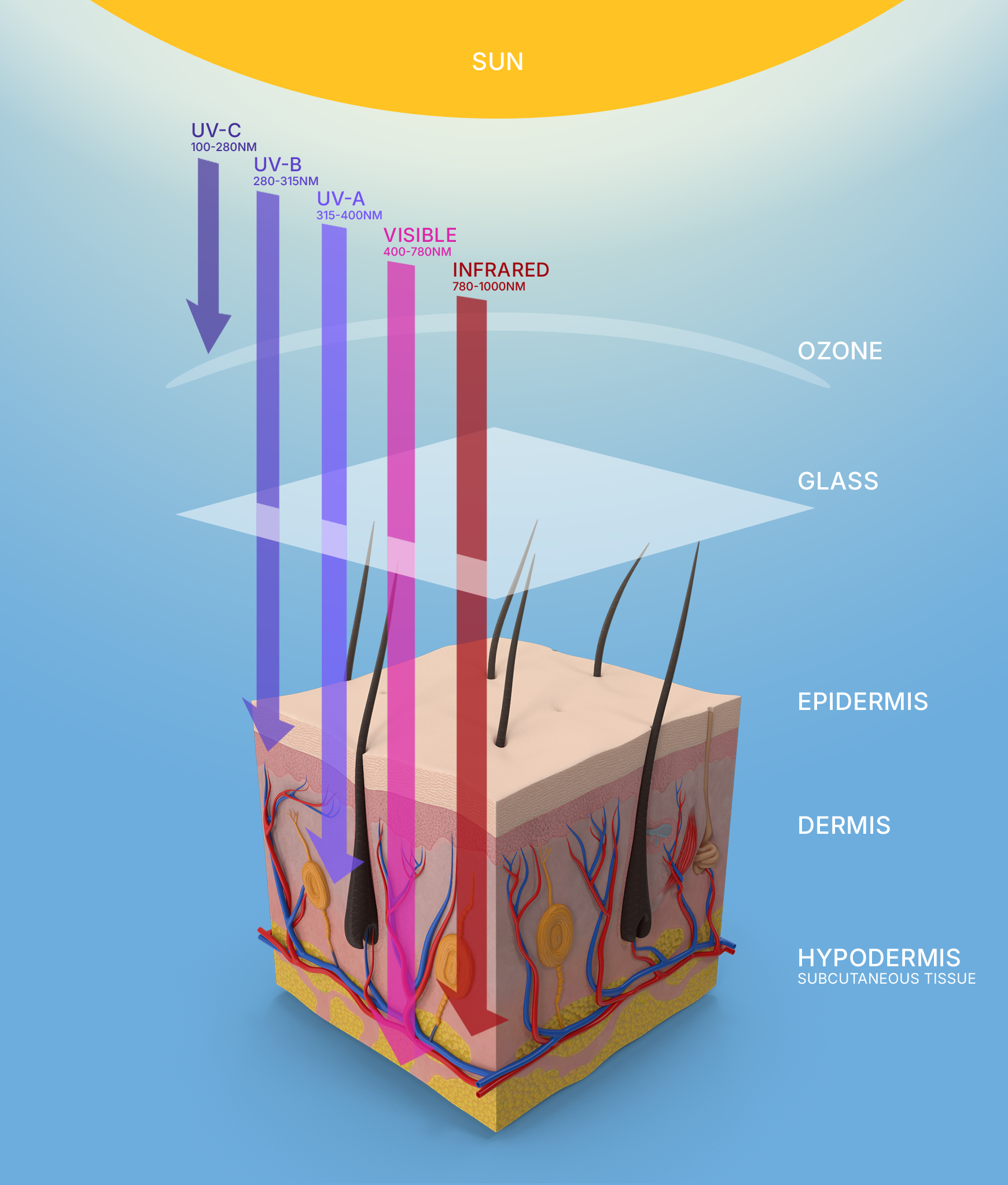
Because UV-C is absorbed so readily by genetic material, it can also harm human cells. Direct exposure may cause temporary skin burns or eye irritation, making it unsafe to use in occupied spaces. This is why safe operation requires careful containment and built-in safeguards to prevent accidental exposure.
254 nm UV-C vs. Broad-Spectrum UV
Before choosing a UV-C disinfection system, it’s important to understand how the UV is generated as it affects safety, containment needs, and day-to-day workflow requirements.
Broad-Spectrum UV
Some disinfection systems rely on pulsed xenon or other broad-spectrum emitters that produce UV-A, UV-B, and UV-C simultaneously. At first glance, covering more of the UV spectrum might seem like an advantage. In reality, it creates challenges that make safe use more difficult:
- Containment issues. Longer wavelengths can pass through glass and small gaps like door sills, and they reflect unpredictably within a space. To control these risks, many systems require blackout curtains or barriers, which adds time, labor, and potential error to every cycle.
- Ozone generation. Broad-spectrum sources often emit wavelengths below 240 nm, which split oxygen molecules and create ozone. Ozone is a respiratory irritant, and its presence requires ventilation before a space can be safely reoccupied.
254 nm UV-C
Low-pressure mercury lamps concentrate their output on a narrow wavelength: 254 nanometers. This wavelength sits at the peak absorption point for microbial DNA and RNA, making it both effective and predictable.
- Contained by glass. 254 nm UV-C cannot pass through standard window glass or most plastics. In practice, closing doors and windows is sufficient to confine it to a space–no curtains or extra barriers required.
- No ozone production. At 254 nm, UV-C does not generate ozone, eliminating the need for added ventilation steps.
Both approaches must be used in unoccupied rooms, but 254 nm UV-C is easier to contain and simpler to integrate safely into daily routines.
Layered Built-In Safety Features
Regardless of the band used, direct exposure to UV light is harmful and should always be avoided. For that reason, modern UV-C devices are designed with multiple overlapping safety features that prevent exposure even if conditions in the space change unexpectedly.
- Visual and Audible Alerts. Status lights and sound sequences signal before and during operation, giving staff multiple forms of warning. This removes ambiguity and ensures everyone nearby knows when UV-C is active.
- Electronic Signage. Doorway signs linked directly to the device provide clear warnings that disinfection is underway. Because they are connected, it can also act as a control system: if the sign is moved or deactivated, the robot will trigger a temporary shutdown to ensure UV-C only runs under safe conditions.
- Motion Detection. Passive infrared (PIR) sensors detect the infrared radiation naturally emitted by warm objects, such as the human body. When a person enters a room mid-cycle, the PIR sensors recognize the heat signature and immediately cut power to the UV-C lamps. This reaction happens in fractions of a second, creating a reliable barrier against accidental exposure.
By arranging safeguards in this way, each layer acts at a different stage: alerts before operation, signage at the point of entry, and motion sensors inside the room. If one safeguard is engaged, others remain in place. This redundancy ensures that safe UV-C disinfection can be deployed confidently in dynamic environments.
Final Thoughts
What makes UV-C safe to use is not a single feature but the combination of design choices that control how the light behaves and how the device operates. Narrow-band 254 nm UV-C can be confined within closed rooms and does not produce ozone, making it far easier to manage safely than broad-spectrum alternatives. Safety systems including alerts that signal before and during operation, connected signage at the point of entry, and motion sensors that react instantly if someone enters provide multiple points of protection.
For facility teams, that combination means confidence in both the effectiveness and the safety of UV-C disinfection.
Frequently Asked Questions
What safety features should you look for when choosing a UV-C disinfection device?
Look for layered safeguards that protect at each stage of a cycle, rather than a single feature. Before a cycle, visual and audible alerts warn anyone nearby. At the room entrance, connected electronic signage warns of disinfection in progress — and because it's linked to the device, moving or deactivating the sign triggers a shutdown. Inside the room, passive infrared (PIR) motion sensors detect body heat and cut power to the lamps in a fraction of a second. Overlapping layers mean that if one safeguard is bypassed, others remain in place.
Why is narrow-band 254 nm UV-C easier to contain than broad-spectrum UV?
254 nm UV-C cannot pass through standard window glass or most plastics, so closing doors and windows is generally enough to confine it to a room. Broad-spectrum sources also emit longer UV-A and UV-B wavelengths that can pass through glass and small gaps like door sills and reflect unpredictably, which is why they often require blackout curtains or barriers. 254 nm UV-C also doesn't generate ozone, avoiding an added ventilation step.
Do you need blackout curtains or special barriers to run a UV-C device safely?
It depends on the technology. Because 254 nm UV-C is contained by ordinary glass, closing doors and windows is typically sufficient — no curtains required. Broad-spectrum systems that emit UV-A and UV-B often do require blackout curtains to prevent light escaping through glass and gaps, which adds time, labor, and potential for error to every cycle.
Is a device that covers more of the UV spectrum actually better at disinfecting?
No. It's a common misconception that spanning UV-A, UV-B, and UV-C disinfects better than a single wavelength. Germicidal efficacy is driven by wavelength energy, absorption, and exposure time — not wavelength variety. 254 nm sits at the peak absorption point for microbial DNA and RNA, so a focused 254 nm output is both effective and predictable, while broad-spectrum systems put much of their energy outside the optimal germicidal range.
Beyond wavelength, what makes a UV-C device safe to use day to day?
Safety comes from combining how the light behaves with how the device operates. Beyond choosing a predictable wavelength like 254 nm, look for engineered safeguards (alerts, connected signage, motion sensors) and a design that completes disinfection without constant interruptions — so staff can run it reliably as part of a routine rather than managing curtains, ventilation, or manual repositioning.


%2C%20Color%3DNegative.png)

