

How UV-C Inactivates C. diff Spores
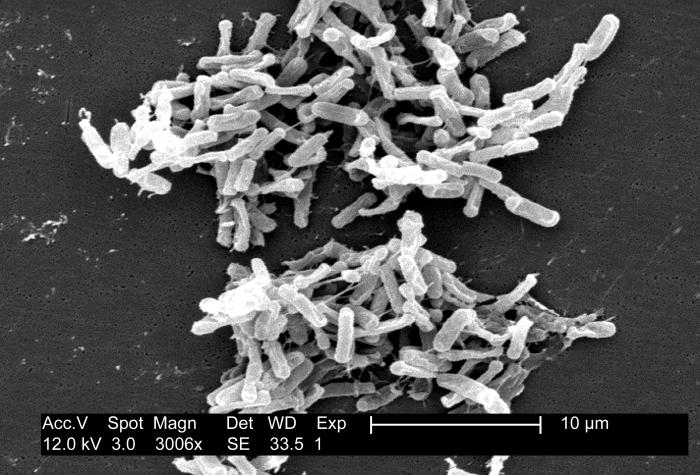
C. diff spores are among the most resilient pathogens in high-risk environments. Learn how 254 nm UV-C inactivates them and what dose research shows.
What Is Clostridioides difficile (C. diff)?
Clostridioides difficile — commonly known as C. diff — is a Gram-positive, spore-forming anaerobic bacterium responsible for a spectrum of gastrointestinal illness ranging from mild diarrhea to life-threatening pseudomembranous colitis, toxic megacolon, and sepsis. [5]
The pathogen's ability to produce hardy, dormant spores is what separates it from most other bacteria and makes environmental decontamination uniquely challenging. These spores can persist on indoor surfaces — including hard surfaces, shared equipment, and fixtures — for months under standard conditions.
The Scale of the C. diff Problem
The burden of C. difficile infection (CDI) is substantial and growing. A 2025 systematic review and meta-analysis covering data from 2016 to 2024 — spanning 59 studies across 24 countries in North America, Europe, the Asia-Pacific region, Latin America, and the Middle East — documented CDI incidence rates across a wide range of institutional and community settings, underscoring how broadly distributed this pathogen has become. [2]
Hypervirulent strains — particularly ribotype 027 (RT027) — have been responsible for major outbreaks across North America and Europe, producing higher levels of toxin and exhibiting increased antibiotic resistance. [2]
Understanding why C. diff is so persistent in indoor environments starts with understanding its spores.
Why C. diff Spores Are So Difficult to Eliminate
Unlike most bacteria that can be killed by standard quaternary ammonium disinfectants (quats), C. diff spores are extraordinarily resistant to many common chemical disinfectants. [4] This resistance is rooted in the spore's multi-layered architecture.
The Structure of a C. diff Spore
A C. diff spore is not simply a dormant cell — it is a highly engineered survival structure. It consists of several protective layers:
• The exosporium: The outermost layer, composed of proteins, that shields the spore from environmental insults.
• The coat: A thick protein shell that blocks entry of many chemical agents.
• The cortex: A modified peptidoglycan layer that maintains the spore's dehydrated, dormant state.
• The core: The innermost compartment where the bacterium's DNA is held in a highly compressed, protected state.
This architecture is why standard alcohol-based disinfectants are ineffective against C. diff spores, and why hand washing with soap and water — which physically removes spores — is the recommended approach when in contact with potentially contaminated surfaces. [5]
The resilience of C. difficile spores enables survival in aerobic atmospheres and resistance against extreme environmental stress including heat, desiccation, and exposure to disinfectants and antimicrobials.
How UV-C Light Inactivates C. diff Spores
UV-C light operates at wavelengths between 200 and 280 nanometers (nm), with 254 nm being the most commonly used wavelength in germicidal applications. Unlike chemical disinfectants that must dissolve through a spore's protein coat, UV-C light energy penetrates the spore structure and is absorbed directly by the nucleic acids inside.
At the molecular level, UV-C absorbed by spore DNA causes the formation of DNA lesions that distort the helix and block DNA replication and RNA transcription. In vegetative cells, the dominant lesions are cyclobutane pyrimidine dimers (CPDs) between adjacent thymines. In bacterial spores, the DNA is bound by small, acid-soluble proteins (SASPs) that shift the DNA into an A-like conformation, which favors formation of a spore-specific lesion known as the spore photoproduct (SP). Either way, the result is the same: the organism is rendered incapable of replication, even though it remains physically intact. [1]
This mechanism works against both vegetative bacterial cells and — critically — against spores.
Why Spores Require Higher UV-C Doses Than Vegetative Cells
While the mechanism is the same, C. diff spores require significantly higher UV-C doses than vegetative bacteria or viruses. [1] Several factors drive this:
• The protective coat and cortex scatter and absorb some incoming UV-C energy before it reaches the core.
• Small, acid-soluble proteins (SASPs) within the spore core bind tightly to DNA, physically protecting it from photodamage. [1]
• The dehydrated state of the spore core reduces the efficiency of UV-C absorption compared to hydrated cells.
This means UV-C dose matters enormously when targeting C. diff spores — a dose sufficient to inactivate MRSA or VRE will not necessarily achieve meaningful spore reduction. [3]
What the Research Says: UV-C Dose and C. diff Inactivation
A 2024 peer-reviewed study published in Pathogens (Blau & Gallert, University of Applied Sciences Emden/Leer) evaluated UV-C 254 nm light against multiple C. diff ribotypes across different test conditions. The findings confirmed that UV-C at sufficient delivered doses reduces C. difficile spore counts to below the limit of detection — validating the mechanism's efficacy against this pathogen across multiple ribotypes. [1]
Critically, the degree of spore reduction achieved is directly proportional to the UV-C dose delivered to the target surface. The dose delivered to any given surface is a function of the device's output intensity and its proximity to that surface — variables that differ substantially between device types, placement strategies, and real-world room configurations. Published research demonstrates that the dose required to achieve a given log reduction in C. diff spores varies significantly depending on surface type, initial contamination level, and the UV-C system used. [1][3][4] This underscores why device selection and positioning are as important as the disinfection protocol itself.
For context, C. diff spores are substantially more resistant to UV-C than common viruses — illustrating why not all UV-C systems perform equally against this pathogen, and why delivered dose should be the primary metric when evaluating any UV-C device for C. diff applications.
UV-C Is Not a Standalone Solution
It is important to frame UV-C disinfection accurately. No single disinfection method eliminates all microbial contamination in a complex environment. UV-C is a terminal disinfection tool — it is most effective when deployed after thorough manual cleaning and as one component within a broader environmental decontamination protocol.
UV-C adds a no-touch, non-chemical layer of surface decontamination that helps address the documented limitations of manual cleaning alone — including inconsistent application, missed surfaces, and human error.
Advantages of UV-C Disinfection for C. diff
When properly deployed, UV-C disinfection offers several meaningful advantages in C. diff management:
• No chemical residue: UV-C leaves no surface residue, making it compatible with sensitive equipment and a wide range of clinical environments.
• No meaningful pathogen resistance: Unlike antibiotics, UV-C light damages DNA through a physical mechanism that pathogens have not been shown to develop meaningful resistance against. Photodamage is a physical process, not a biochemical one.
• Auditable cycle records: Modern autonomous UV-C systems can log cycle duration, device positioning, and utilization data, providing an auditable record of completed disinfection runs — unlike manual cleaning, which has no built-in verification mechanism.
• Broad-spectrum mechanism: UV-C light's mechanism of DNA photodamage is effective across a range of bacterial pathogens, including spore-formers. The efficacy of any specific UV-C device against a given pathogen depends on delivered dose, which in turn depends on device output, proximity to the surface, and surface condition.
• No chemical residues or off-gassing: UV-C disinfection does not produce chemical residues or off-gassing. As with any germicidal disinfection technology, re-entry protocols must be followed to ensure personnel safety — consult the device manufacturer's guidelines for specific requirements.
Factors That Affect UV-C Efficacy Against C. diff Spores
Those evaluating or deploying UV-C systems should be aware of the variables that most significantly impact C. diff spore inactivation:
• UV-C dose delivered (mJ/cm²). This is the single most important variable. Dose is a function of UV-C intensity (output of the device) and proximity to the target surface. The closer and more powerful the device, the higher the dose delivered — and the greater the log reduction achieved.
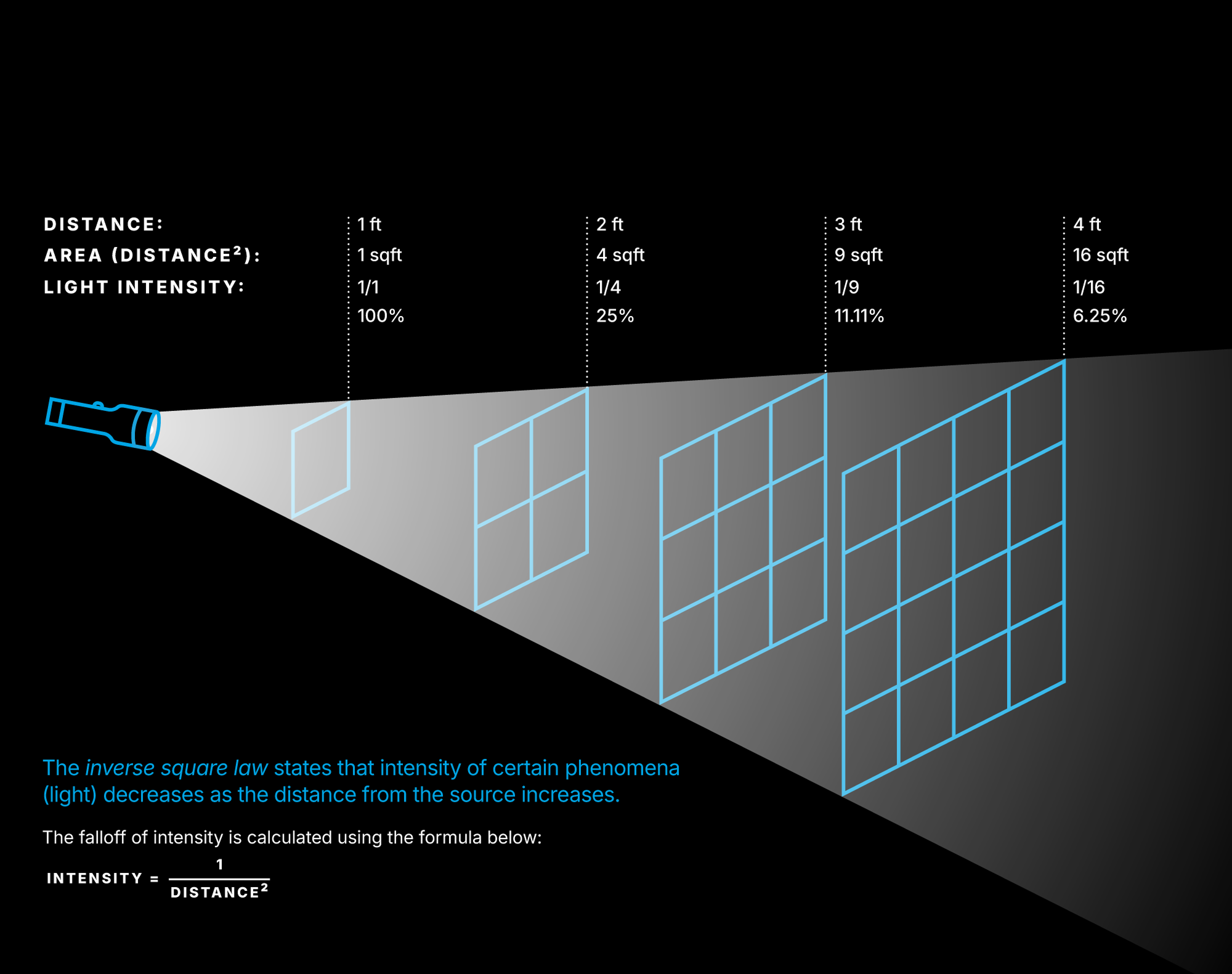
• Distance from the UV-C source. UV-C intensity decreases with the square of the distance from the source (the inverse square law). Surfaces far from the UV-C device — or around corners and behind obstructions — receive a fraction of the dose delivered to surfaces in direct line of sight.
• Room geometry and shadowing. UV-C light does not penetrate opaque objects. Furniture, equipment carts, and other objects create shadows. Many protocols therefore require multiple device positions per room to achieve comprehensive coverage.
• Surface condition (cleanliness). Organic load absorbs and scatters UV-C energy. Pre-cleaning with an appropriate sporicidal disinfectant is essential before UV-C terminal disinfection.
• Surface material and reflectivity. Some materials (like certain metals) reflect UV-C, which can help distribute energy throughout a room. Others absorb it. Research has confirmed that stainless steel, plastic, and glass all behave differently in UV-C disinfection scenarios. [1][4]
Frequently Asked Questions About UV-C and C. diff
Does UV-C light inactivate C. diff spores?
Under the right conditions — correct wavelength and sufficient delivered dose — UV-C light at 254 nm has been shown in peer-reviewed research to inactivate C. diff spores by damaging their DNA and preventing replication. Spores require higher doses than vegetative bacteria or viruses, making device selection and positioning critical factors in achieving meaningful spore reduction. [1][3]
What makes some UV-C systems more effective against C. diff than others?
Several engineering and operational factors determine how effectively a UV-C system inactivates C. diff spores on surfaces:
• Delivered dose at the target surface. Because UV-C intensity falls off with the square of distance, systems that deliver high doses in close proximity to surfaces achieve substantially greater log reductions than those operating from a distance.
• Coverage and shadow management. UV-C does not penetrate opaque objects. Systems that operate from multiple positions — or move autonomously through a space — reduce the shadowed areas where spores can survive a disinfection cycle.
• Cycle consistency and verification. Autonomous systems with automated positioning and task logging produce more reproducible disinfection outcomes than manually positioned devices that depend on operator judgment for placement and runtime.
• Lamp output and condition. 254 nm is the most extensively studied wavelength for spore inactivation.
When evaluating UV-C systems for C. diff applications, ask vendors to specify the dose delivered to surfaces under realistic operating conditions — not just the device's nominal output at an idealized reference point.
Can UV-C replace bleach for C. diff decontamination?
UV-C should be considered a complement to, not a replacement for, chemical cleaning. Bleach-based disinfectants remain the gold standard for chemical C. diff decontamination per CDC guidance. [6] UV-C adds an additional layer of coverage.
Conclusion
Clostridioides difficile spores represent one of the most demanding challenges in environmental decontamination. Their multi-layered architecture, resistance to common disinfectants, and ability to persist on surfaces for months make them a persistent contamination concern in indoor environments. UV-C light disinfection offers a no-touch, no-chemical approach to surface decontamination that is supported by a growing body of peer-reviewed research. The evidence indicates that at the correct wavelength and sufficient delivered dose, UV-C is effective at inactivating C. diff spores on surfaces.
The nuance lies in understanding that C. diff spores require greater UV-C dose than many other common pathogens, and that the dose delivered to any surface depends heavily on device output, proximity, and room configuration. When incorporated into a thorough environmental decontamination protocol, UV-C technology can reduce surface contamination from C. diff spores and other resilient spore-forming pathogens.
References
1. Blau K, Gallert C. Efficacy of UV-C 254 nm Light and a Sporicidal Surface Disinfectant in Inactivating Spores from Clostridioides difficile Ribotypes In Vitro. Pathogens. 2024;13(11):965. doi:10.3390/pathogens13110965
2. Akorful RAA, et al. The Global Burden of Clostridioides difficile Infections, 2016–2024: A Systematic Review and Meta-Analysis. Infectious Disease Reports. 2025;17(2):31. doi:10.3390/idr17020031
3. Nerandzic MM, et al. Sorting through the Wealth of Options: Comparative Evaluation of Two Ultraviolet Disinfection Systems. PLOS ONE. 2014. doi:10.1371/journal.pone.0107444
4. Różańska A, et al. Evaluation of the Efficacy of UV-C Radiation in Eliminating Clostridioides difficile from Touch Surfaces Under Laboratory Conditions. Microorganisms. 2025;13(5):986. doi:10.3390/microorganisms13050986
5. CDC. Clostridioides difficile Infection (CDI) Surveillance. Centers for Disease Control and Prevention. https://www.cdc.gov/healthcare-associated-infections/php/haic-eip/cdiff.html
6. CDC. Guidelines for Environmental Infection Control in Health-Care Facilities. Centers for Disease Control and Prevention. https://www.cdc.gov/infection-control/media/pdfs/guideline-environmental-h.pdf
Image credit:
CDC/ Lois S. Wiggs (Public Health Image Library ID #6260), 2004.


%2C%20Color%3DNegative.png)

