

How to Verify UV-C Disinfection Is Working
UV-C leaves no visible trace, so how do you confirm it worked? Learn how dosimetry and validation verify a UV-C device is delivering the required dose.
UV-C light is invisible, and surfaces don’t change when exposed. That makes one thing clear: judging a UV-C device by sight alone is impossible. So how do facilities know it’s actually disinfecting the way it’s supposed to? A UV-C disinfection device is working if it delivers enough light energy, or dose, to inactivate microorganisms at meaningful levels. Whether those reductions are achieved depends on five critical factors: the intensity of the source, the duration of exposure, the distance to the surface, line of sight, and the characteristics of the target pathogen. Because these variables shift across environments, dose delivery is rarely uniform. Validation is the process of confirming that a UV-C protocol reliably achieves the microbial reductions it is designed to deliver.
Understanding Log Reductions
A log reduction is a logarithmic measure of how effectively a disinfection process reduces a microbial population. Each step on the log scale represents a tenfold decrease in surviving organisms:
- 1-log reduction → 90% inactivation
- 2-log reduction → 99% inactivation
- 3-log reduction → 99.9% inactivation
- 4-log reduction → 99.99% inactivation
The difference between 99% and 99.9% may appear minor, but in practice it is significant. A surface starting with one million viable organisms would still carry ten thousand after a 2-log reduction, but only one thousand after a 3-log reduction. For resilient organisms such as spores, even higher reductions may be necessary.
These thresholds provide the benchmarks against which UV-C protocols are judged. Now that we know how performance is measured, the next question is: how do you make sure a device actually achieves the log reductions it claims? That’s where validation comes in.
Methods of Validation
The germicidal effect of UV-C depends on cumulative dose, or fluence, measured in millijoules per square centimeter (mJ/cm²). This cumulative nature means microorganisms are inactivated by the total energy they absorb over time, which is governed by two factors: the intensity of UV-C light at the surface and the duration of exposure.
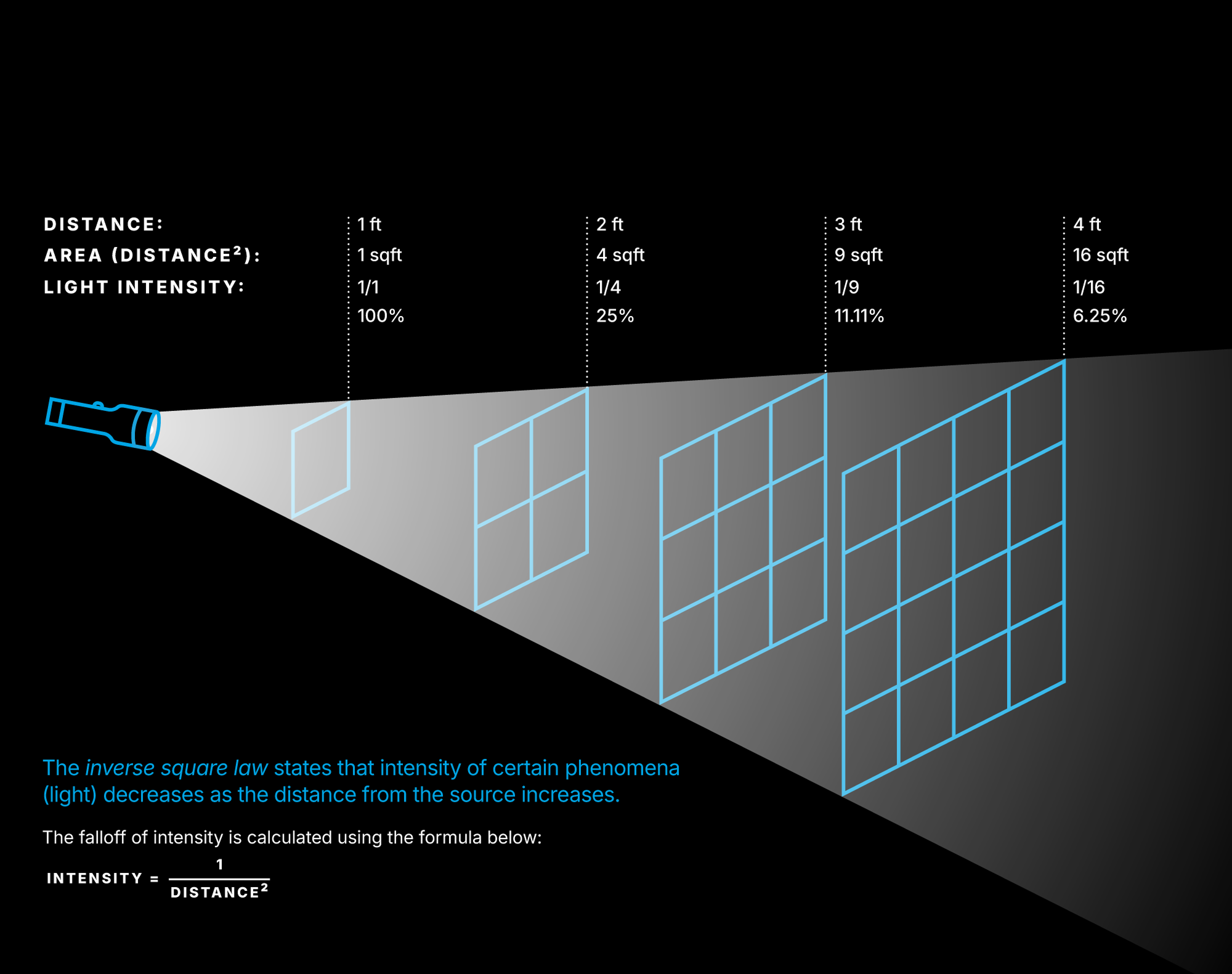
Both of these variables are shaped by the geometry of the space. Distance has an outsized effect because of the inverse square law: as a surface moves farther from the source, the intensity of light drops rapidly, so it takes much longer to accumulate the same dose. Shadowing creates a different challenge—since UV-C travels in straight lines, any obstruction between the lamp and a surface can block or reduce exposure, leaving parts of the environment undertreated.
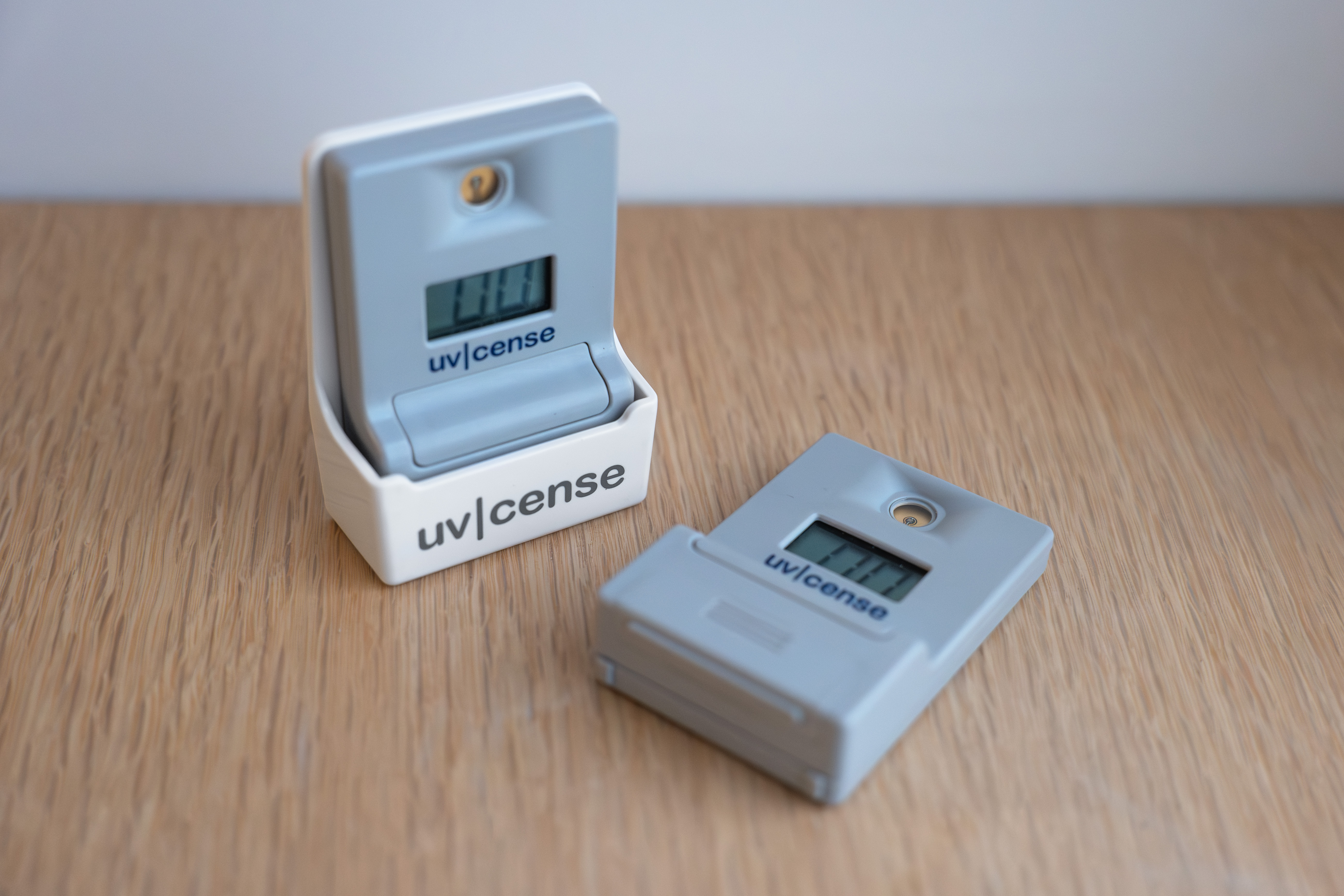
These differences are not obvious without measurement. UV-C light is invisible, and surfaces do not change appearance when they receive more or less exposure. A surface that has met the required dose looks identical to one that has not. For this reason, facilities rely on tools to measure dose directly. Two of the most common are digital dosimeters and colorimetric indicators.
- Digital dosimeters measure cumulative UV-C energy at a given point during a cycle. Their readings can be compared against published thresholds for microbial inactivation, making it possible to evaluate whether cycle times and device placement are producing the intended dose.
- Colorimetric indicators, often called dosimeter cards, contain photochromic compounds that change color when exposed to UV-C. These provide a visible record of exposure and can be distributed across a space to show how coverage varies, especially in corners or behind equipment.

Used together, these methods offer both quantitative and spatial perspectives on UV-C delivery. They help facilities refine protocols, document performance, and demonstrate that their devices are achieving the reductions they are intended to provide.
Ongoing Validation: Keeping Disinfection Effective Over Time
Validation cannot be treated as a single milestone, because both environments and priorities evolve over time.
- Spaces change. UV-C light travels in straight lines, so any new object in a room, whether equipment, carts, or a shifted piece of furniture, can block exposure. A surface that once had a clear line of sight may now be in partial shadow, receiving less energy. In those cases, even if the device runs for the same length of time, the surface takes longer to accumulate the required dose for inactivation.
- Targets shift. Not all microorganisms require the same dose for inactivation. Bacteria are generally more susceptible, while spores and some viruses need higher doses to achieve equivalent reductions. If disinfection goals expand to include more resistant organisms, protocols must be revalidated to ensure that cycles meet those higher benchmarks.
Ongoing validation captures these changes. By placing dosimeters when room layouts change or when disinfection priorities expand, facilities can confirm that UV-C protocols remain aligned with the reductions they are intended to achieve.
Ensuring your UV-C Device Delivers Reliable Microbial Reduction
To know whether a UV-C disinfection device is working is to confirm that it delivers the dose needed for meaningful microbial reduction. Those reductions are defined in terms of log values, which set the benchmark for effectiveness. Validation methods, such as digital dosimeters and colorimetric indicators, translate that benchmark into practice by showing whether surfaces are receiving the necessary exposure. When built into routine operations, this process ensures that UV-C protocols remain effective, even as spaces and disinfection priorities evolve.
Frequently Asked Questions
What does a 3-log reduction actually mean for a disinfected surface?
A log reduction is a logarithmic measure of how many viable microorganisms a process eliminates. Each step is a tenfold decrease: 1-log removes 90%, 2-log removes 99%, 3-log removes 99.9%, and 4-log removes 99.99%. The difference is significant in practice — a surface starting with one million viable organisms would still carry 10,000 after a 2-log reduction, but only 1,000 after a 3-log reduction. Resilient organisms such as spores may require even higher reductions.
How much UV-C dose is needed to inactivate pathogens like C. diff, MRSA, or C. auris?
The required dose (in millijoules per square centimeter, mJ/cm²) varies by organism. Published benchmarks include roughly 46 mJ/cm² for C. diff, 39.6 mJ/cm² for Candida auris, 22 mJ/cm² for VRE, and 10 mJ/cm² for MRSA — each to reach a greater-than-3-log (99.9%) reduction. More susceptible organisms like Pseudomonas aeruginosa need far less (around 6 mJ/cm²). Because more resistant pathogens require higher doses, the dose actually delivered — not a device's nominal output — is what determines whether a given pathogen is inactivated.
What's the difference between a digital dosimeter and a colorimetric indicator card?
Both measure the UV-C dose delivered to a surface, but differently. A digital dosimeter measures cumulative UV-C energy at a specific point during a cycle, giving a numeric reading you can compare against published inactivation thresholds. A colorimetric indicator — often called a dosimeter card — contains compounds that change color when exposed to UV-C, providing a visible record. Cards can be spread across a room to reveal how coverage varies, especially in corners or behind equipment. Used together, they give both quantitative and spatial confirmation.
Can you tell whether a surface received enough UV-C just by looking at it?
No. UV-C light is invisible, and surfaces don't change appearance when exposed. A surface that received its full required dose looks identical to one that received almost none. That's why facilities rely on measurement tools — digital dosimeters and colorimetric indicator cards — rather than visual inspection to confirm disinfection.
Why does UV-C disinfection need to be re-validated when a room's layout changes?
UV-C travels in straight lines, so any new object — equipment, a cart, or shifted furniture — can block line of sight and shadow surfaces that were previously exposed. A surface now in partial shadow accumulates less energy, so the same cycle time may no longer deliver the required dose. Disinfection goals can also expand to include more resistant organisms that need higher doses. Placing dosimeters whenever a layout or target changes confirms protocols still meet their intended reductions.



%2C%20Color%3DNegative.png)

