

UV-C Robot Safety Sensors Explained
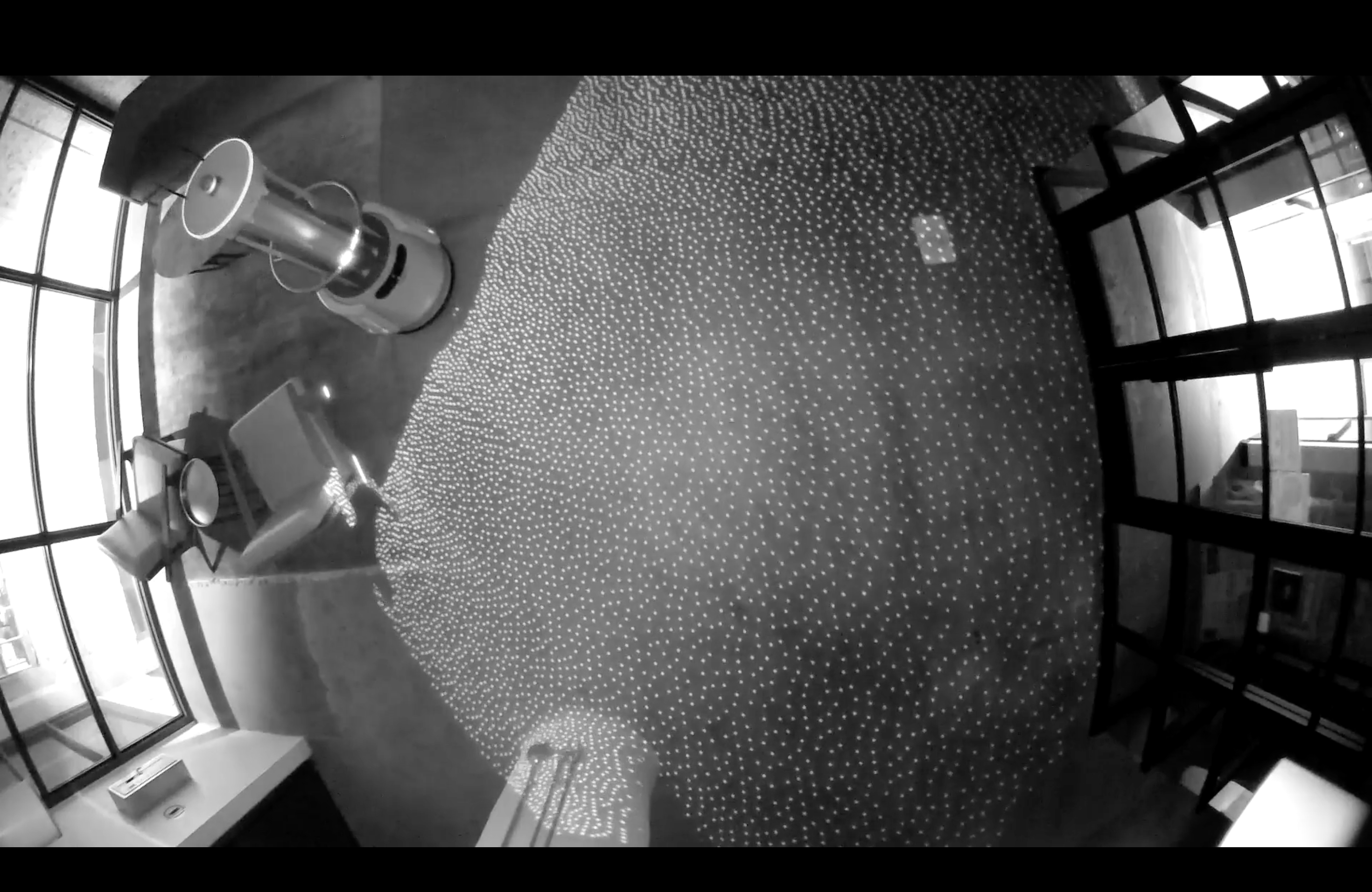
How do UV-C robots protect people nearby? A look at the built-in motion, proximity, and safety sensors that halt irradiation when someone enters the room.
Humans make sense of their surroundings by combining different cues. Eyesight outlines the location of walls or furniture. Sounds hint at nearby movement. Touch confirms where objects and surfaces are. Each input adds context, and together they form a complete understanding of a space.
Robots operate in the same way; except instead of senses, they rely on sensors. Each sensor measures a specific property, such as distance, shape, or motion, and sends that information to the robot’s system. On their own, these inputs provide snapshots of the environment. Combined, they form a full, detailed picture that allows a UV-C disinfection robot to navigate independently while maintaining safe operation.
Sensor Technology: Understanding How Robots Gather Data
A sensor detects a physical property such as distance, light, or heat, and translates it into a signal the robot can process. Different sensors specialize in different tasks. When these inputs are integrated, they provide the information a robot needs to build a map of its environment, determine its position, and decide how to move through a space safely and efficiently.
The Sensing Technologies in An Autonomous UV-C Robot
- LiDAR (Light Detection and Ranging): LiDAR emits laser pulses and measures the time it takes for them to reflect back, creating a precise distance profile of nearby surfaces. On the A1, this defines walls, doorways, and large objects, giving the robot the structural map it needs to navigate a room
- RGB-D/ToF (Red, Green, Blue, Depth/Time-of-Flight) Cameras: These cameras capture both color images and depth information. By measuring how light travels across surfaces, they determine shape, distance, and orientation. On the A1, they identify the shape and orientation of furniture and equipment, allowing the robot to move around them with precision.
On the A1, these cameras interpret the form of furniture and equipment, enabling precise movement around 3D objects.
- Ultrasonic Sensors: Ultrasonic sensors emit sound waves and measure the time it takes for echoes to return. Through this, they are able to measure distance and are excellent at detecting close-range objects. On the A1, they detect low-lying objects such as cords or chair legs that other sensors may overlook.
- PIR (Passive Infrared) Motion Sensors: PIR sensors detect infrared energy emitted by body heat when a person enters the room. On the A1, they immediately pause UV-C disinfection if motion is detected, forming a critical layer in its safety system.
Together, these sensors give the ADIBOT A1 a well-rounded awareness of its environment, each covering gaps the others might leave.
How SLAM Converts Sensor Data Into Real-Time Navigation
Sensors provide raw measurements; SLAM (Simultaneous Localization and Mapping) turns them into intelligence. SLAM fuses data from LiDAR, cameras, and ultrasonic sensors to build a map while simultaneously determining the robot’s position inside it. This process runs continuously. As the A1 moves, it compares new sensor readings to its existing map and constantly updates its understanding of the room.
If a new obstacle suddenly appears in an environment, SLAM recalculates the robot’s path in real time. In this way, SLAM doesn’t just help the robot know where it is; it helps it decide where to go next and adapt based on conditions. SLAM is what turns raw sensor data into actionable navigation.
In Practice: Navigation
Consider the A1 entering a conference room for the first time:
- LiDAR outlines the room’s perimeter.
- RGB-D/ToF cameras capture the shape and orientation of the table and chairs.
- Ultrasonic sensors detect a cable lying across the floor.
- SLAM merges all these inputs into a single, navigable map.
Using that model, the A1 moves to its assigned disinfection points, effortlessly maneuvering around furniture and low-lying objects. All of this occurs automatically, without staff needing to supervise or reposition the device.
Safety As Part of Awareness
Awareness extends beyond objects; it also includes the presence of people. PIR motion sensors provide a dedicated safeguard. If someone opens a door mid-cycle, the A1 pauses UV-C output instantly and resumes only when the room is safe again. Safety is built into the robot’s perception.
In Practice: Safety
If a staff member opens the door mid-cycle, PIR sensors recognize movement the moment they step inside. That signal is processed instantly, and the A1 powers down its lamps until the room is clear. Safety does not depend on staff oversight; it is built into how the robot perceives and responds to its environment.
Why Multiple Sensors Are Essential for Reliable Robot Navigation
Every sensor has strengths and limitations:
- LiDAR can struggle with highly reflective surfaces.
- Cameras depend on lighting and can be affected by shadows.
- Ultrasonic sensors excel at short range but lack full-room coverage.
- PIR sensors detect people, not objects.
Individually, they provide valuable insights. Together, they create reliable, fault-tolerant perception. When one sensor reaches its limit, another compensates. For the A1, this layered approach strengthens navigation, enhances safety, and ensures reliable performance in complex, real-world environments.
Conclusion: How Integrated Sensors and SLAM Enable Safe, Autonomous UV-C Disinfection
The ADIBOT A1 navigates safely and effectively because it blends multiple sensing technologies with advanced SLAM processing. LiDAR, RGB-D/ToF cameras, ultrasonic sensors, and PIR motion detection work together to map the environment, track movement and positioning, avoid obstacles, and respond in real time to changes in its environment.
No single sensor does all the work. Their integration is what makes the A1 adaptable, dependable, and capable of delivering high-quality disinfection in dynamic spaces.


%2C%20Color%3DNegative.png)

