


The Tech
How our UV-C robots work
Our robots don’t just travel from point A to point B–they perceive and respond to their surroundings in real time.
Map It Out
Dual LiDAR systems scan the environment to build 3D maps, identifying walls, equipment, and open spaces. This spatial awareness allows the robot to plan disinfection routes without manual setup.
Navigate With Awareness
Ultrasonic sensors, an RGB-D camera with a Time-of-Flight (ToF) depth sensor, and infrared sensors enable the robot to detect obstacles and adjust its path in real time, ensuring efficient movement through dynamic environments.
Stay Safe
PIR motion sensors pause disinfection if unexpected movement is detected. A Bluetooth-enabled safety sign, halo indicator light, and adjustable audible alerts provide clear warnings to prevent UV-C exposure.
Outsmart Shadowing
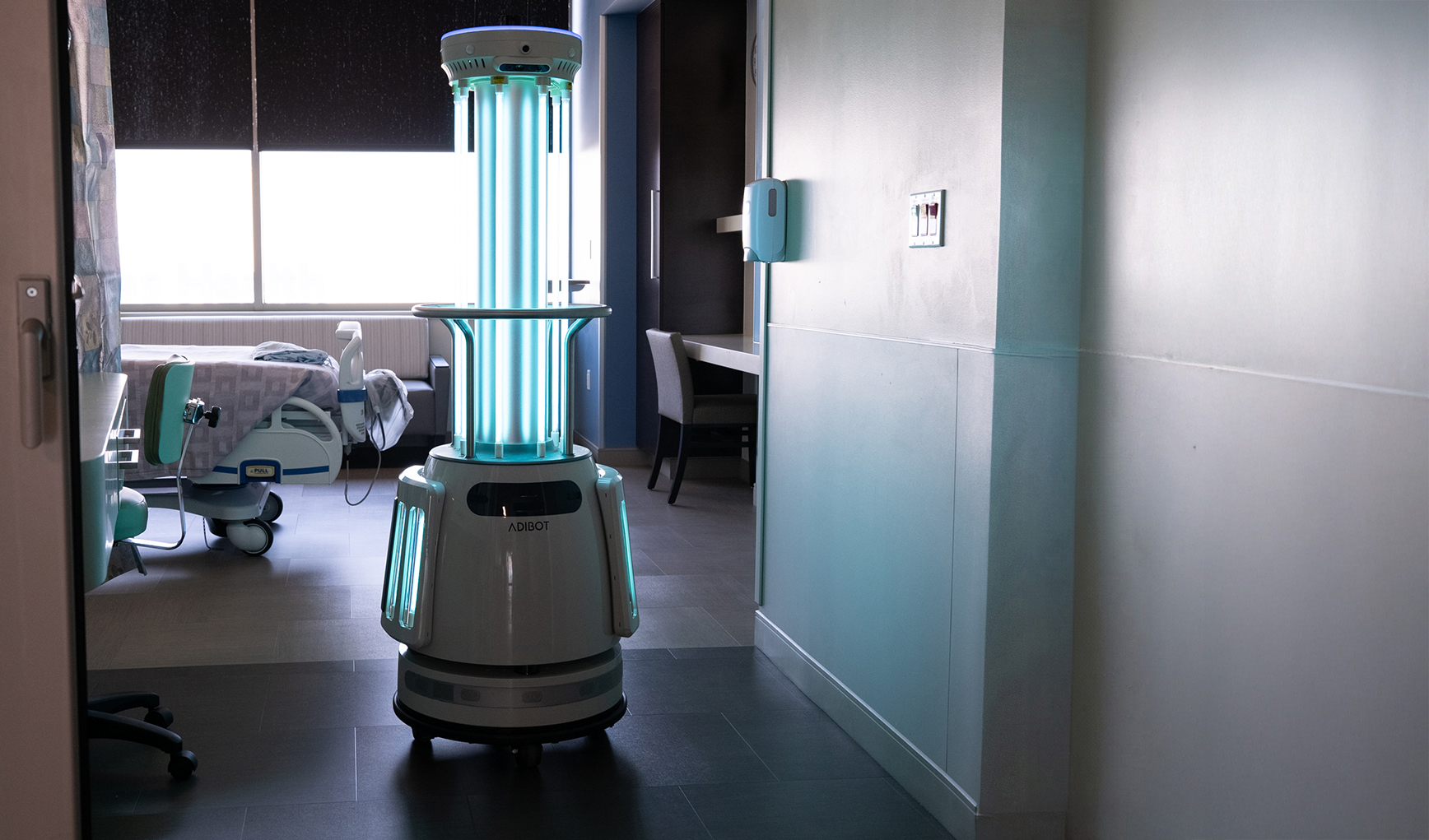
Shadowing happens when objects block UV-C light, leaving gaps in disinfection. An autonomous UV-C robot moves around obstacles, exposing surfaces from multiple angles to minimize shadows and ensure thorough, consistent coverage.
Schedule Your Workflow
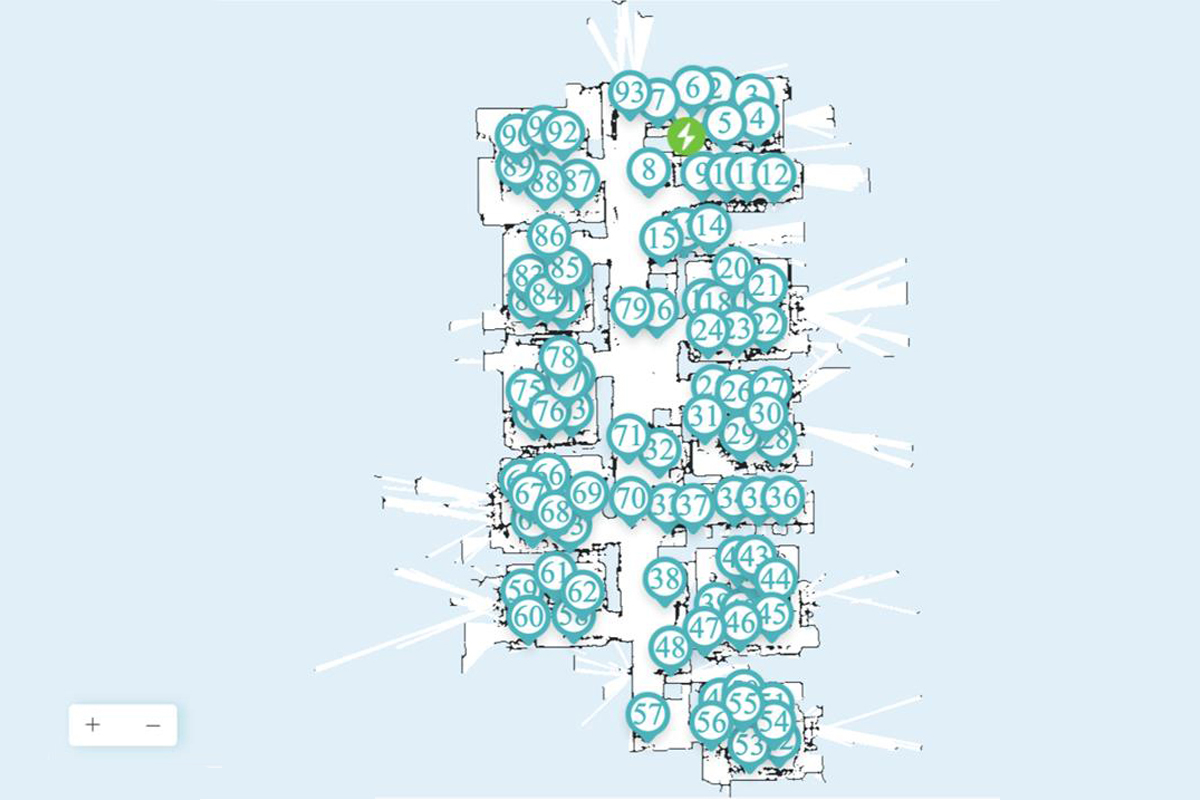
Scheduled disinfection tasks allow the A1 to autonomously start sessions at times defined by the operator. Once initiated, it leaves its dock and systematically disinfects rooms, or even entire departments, covering multiple disinfection points efficiently during off-hours.
This image depicts a complete operating room unit disinfection program using this feature, encompassing 90+ disinfection points in just 1 hour and 30 minutes.



JOIN OUR NEWSLETTER
Email

We never share your information


%2C%20Color%3DNegative.png)

