


The Science
How UV-C works
The Ultraviolet Spectrum
Ultraviolet (UV) light is a type of electromagnetic radiation with wavelengths shorter than visible light, ranging from about 100nm to 400nm. It lies just beyond the violet end of the visible spectrum, hence the name "ultraviolet." UV light is divided into three main types: UV-A, UV-B, and UV-C, based on wavelength and energy. While UV light is invisible to the human eye, it can cause effects like sunburn and is used for sterilization and detecting substances.
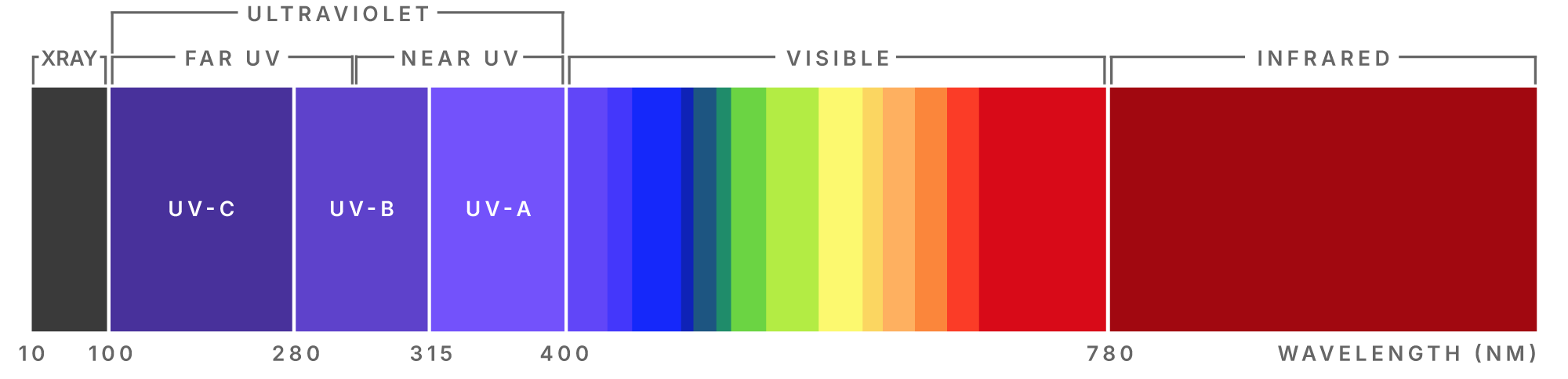
UV-A (315–400nm)
The longest wavelengths of the spectrum, and therefore the lowest energy. UV-A reaches deeper skin layers and contributes to long-term photoaging.
UV-B (280–315nm)
Slightly more energy than UV-A. It plays a role in certain biological processes like vitamin D and melanin production, damaging cells in the upper skin layers.
UV-C (100–280nm)
Possessing the highest energy in the UV spectrum, UV-C is the most effective at inactivating microorganisms. It directly damages nucleic acids, stopping replication.
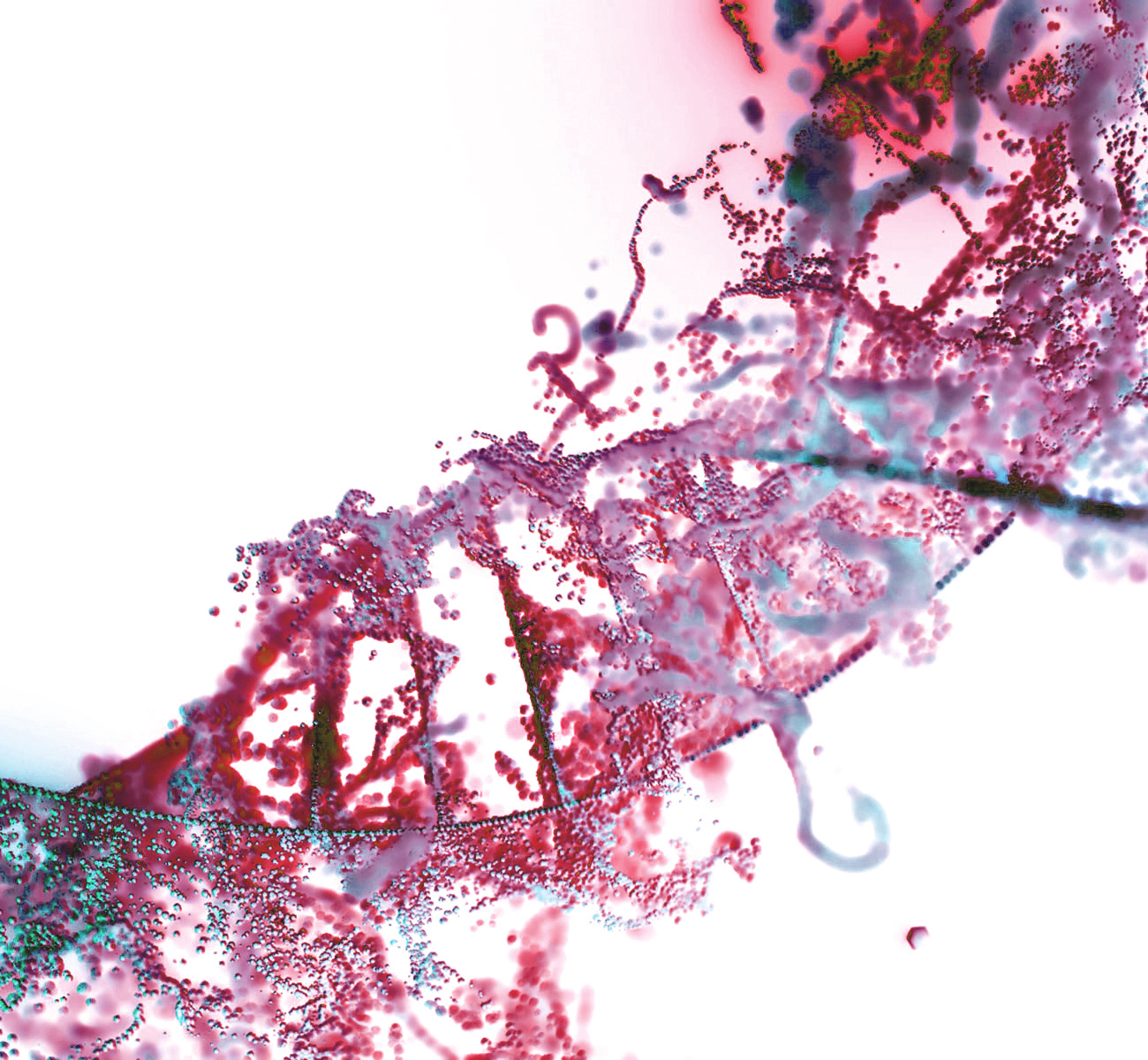
UV-C light inactivates microorganisms by permanently disrupting their DNA and RNA, preventing replication and reducing the transmission or spread of unwanted microbes.
Electromagnetic radiation is classified by wavelength, with shorter wavelengths carrying higher energy. Among ultraviolet wavelengths, UV-C has the highest energy, making it the most effective for germicidal irradiation.
UV-C light delivers high-energy photons in the 100–280nm range, the most germicidal band of the ultraviolet spectrum. These photons are absorbed by the DNA or RNA of microorganisms, causing structural damage through the formation of pyrimidine dimers. This disrupts the pathogen’s genetic code, preventing replication.
UV-C light delivers high-energy photons in the 100–280nm range, the most germicidal band of the ultraviolet spectrum. These photons are absorbed by the DNA or RNA of microorganisms, causing structural damage through the formation of pyrimidine dimers. This disrupts the pathogen’s genetic code, preventing replication.
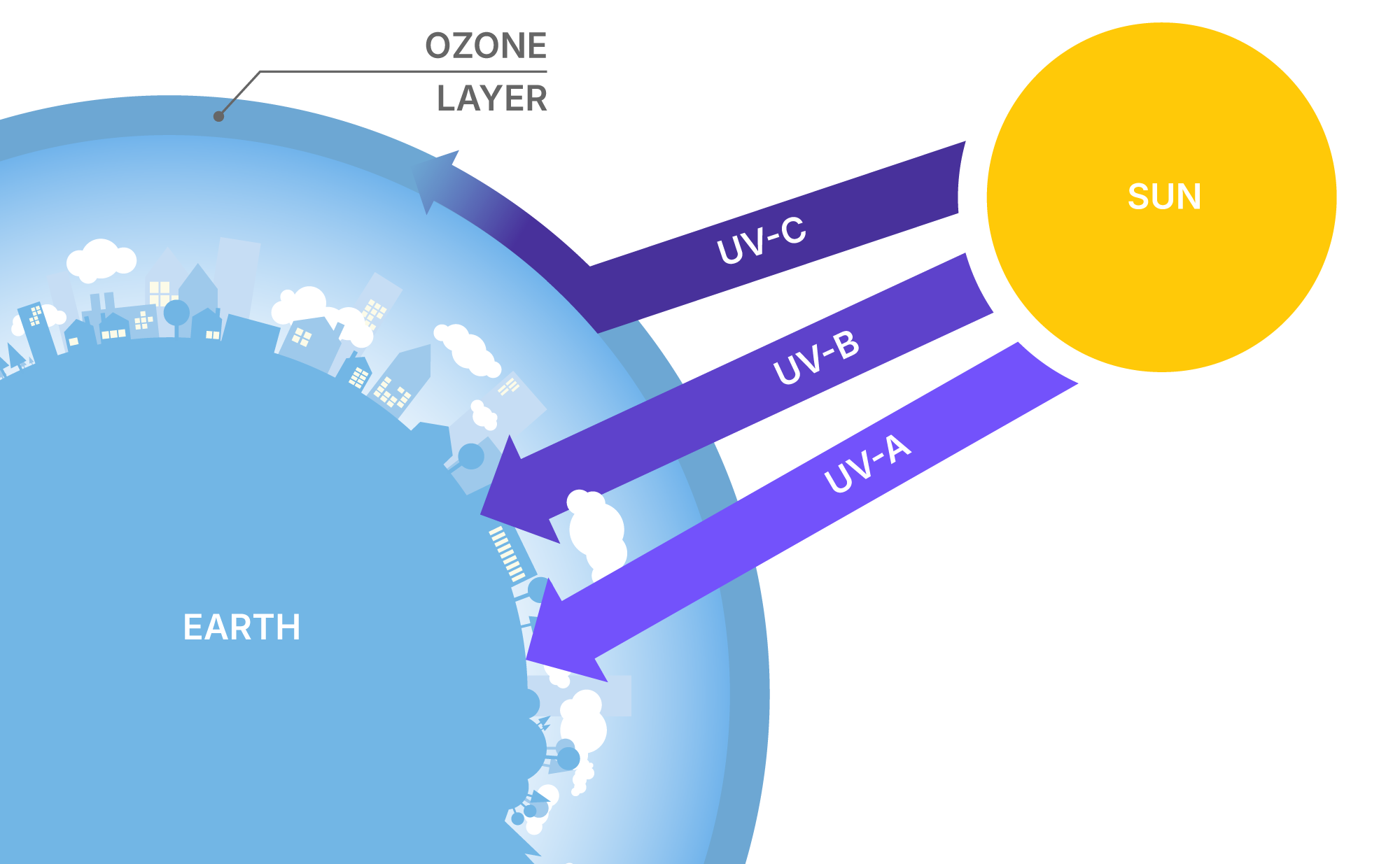
While the sun produces UV-C naturally, Earth’s ozone layer absorbs it completely, preventing it from reaching the surface. However, when generated artificially at 254nm, UV-C becomes a powerful tool for disinfection.
UV-C disinfection doesn’t replace manual cleaning and disinfection—it strengthens it.
Even with strong protocols in place, some microorganisms are naturally more resilient and can persist despite routine cleaning and disinfection. For example, research shows that, on average, only 49% of surfaces are properly treated during terminal cleaning within hospitals. That’s why adjunct technologies like UV-C exist; to complement these efforts by helping fill in the gaps.
But, for UV-C to be used effectively...
Distance and positioning matter.
Like all forms of light, UV-C follows the inverse square law, meaning its intensity decreases exponentially as distance increases. Doubling the distance between a target and a UV-C source reduces its intensity to just one-fourth of its original power, not one-half as some might think.
As a result, it would take four times longer to disinfect a surface from 2 meters away than it would from just 1 meter.
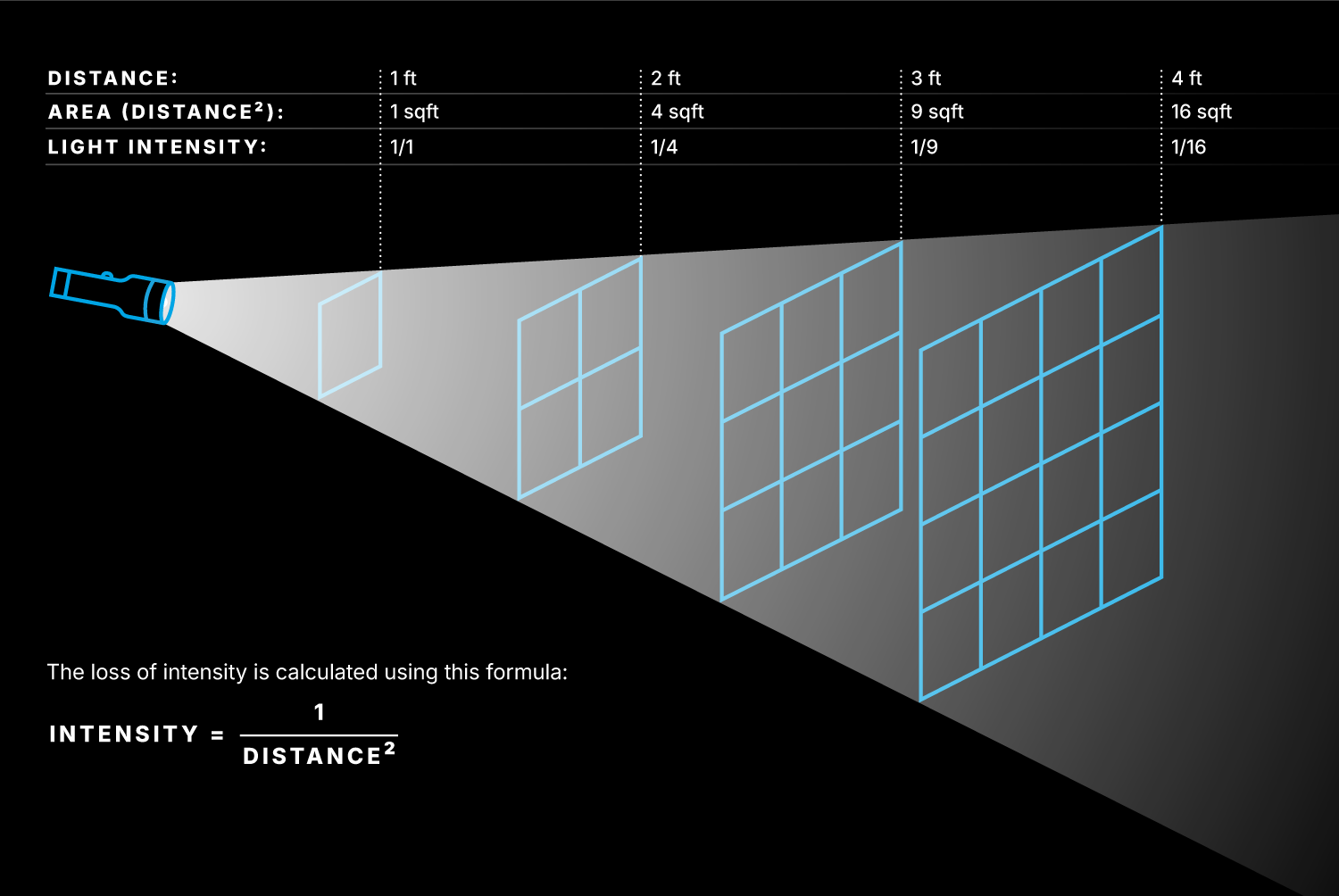
Even small differences in distance can significantly extend the time it takes to achieve the target dosage.
This simulation shows the principle in practice. As the A1 moves through the space, the closer it is to a surface, the faster that surface reaches the target dose of 100 mJ/cm², the dosage required to achieve at least a 4-log reduction of C. diff. Surfaces just a few feet farther away accumulate UV-C exponentially slower, simply because they receive a lower intensity of UV-C light.
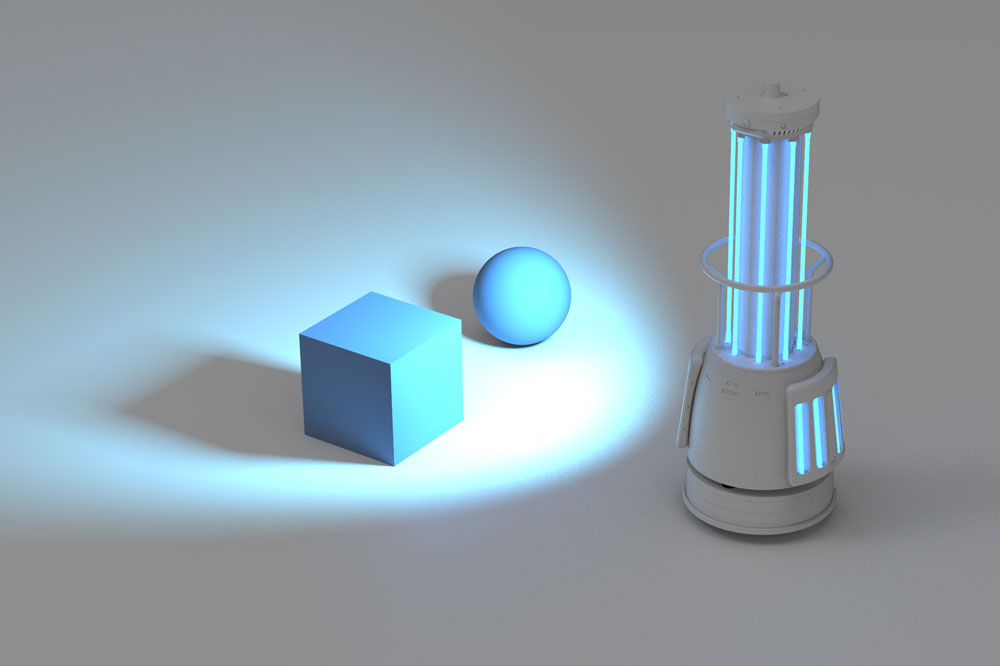
This means UV-C light must be positioned close to target surfaces for maximum effectiveness—but real-world environments present challenges. Additionally, objects in a space can cast shadows, blocking the UV-C light from reaching certain areas and leaving some surfaces insufficiently disinfected.
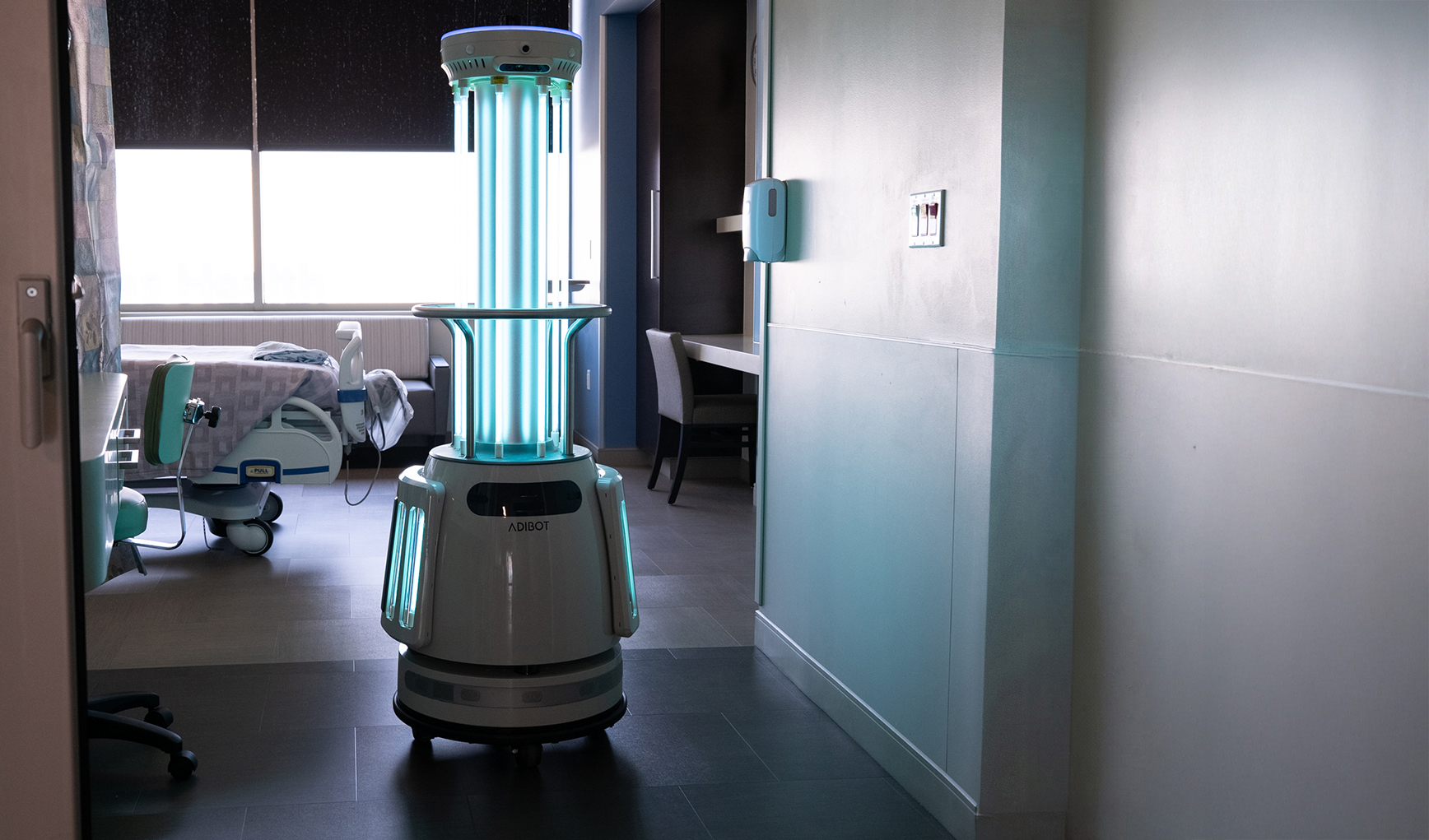
That’s where our intelligent robotics come in.
Learn more on our tech page.


JOIN OUR NEWSLETTER
Email

We never share your information


%2C%20Color%3DNegative.png)

